 LV
 EN
 RU
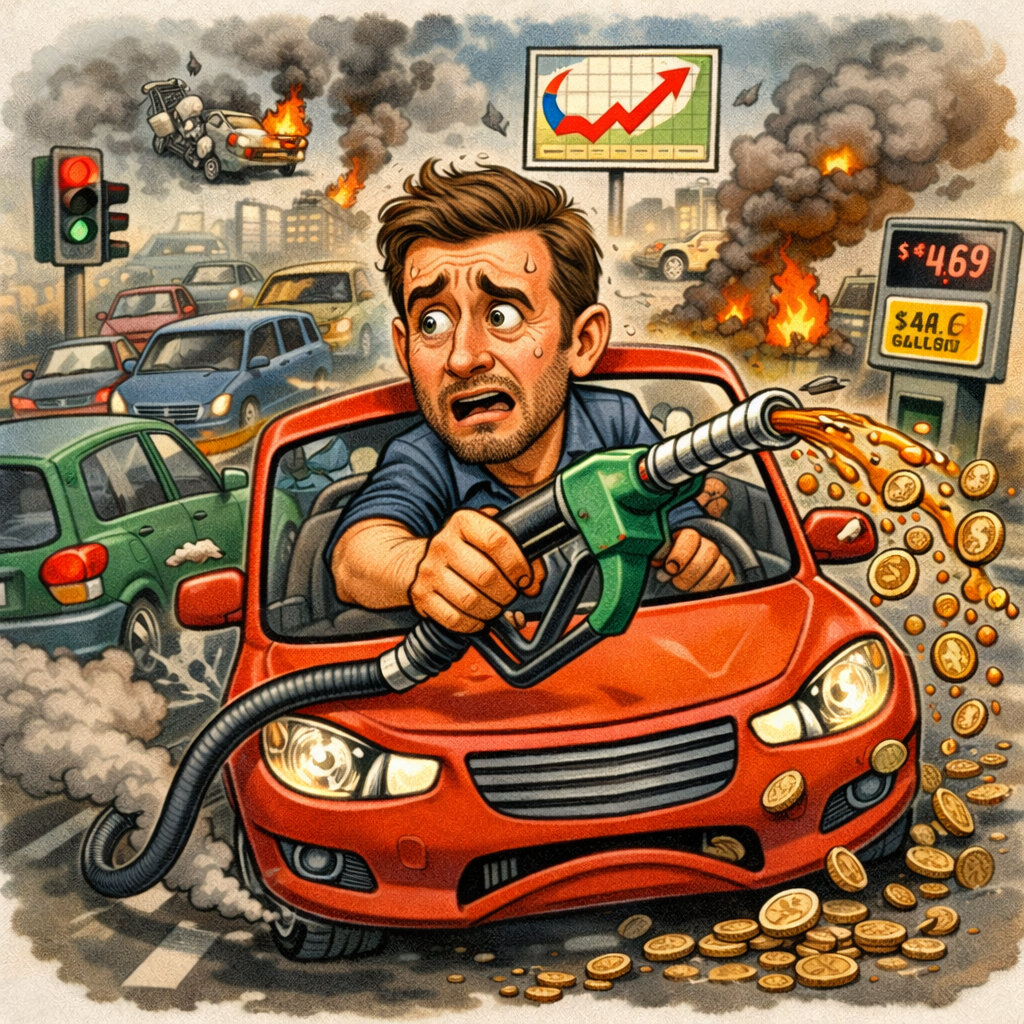
Fuel costs are always a sensitive topic for drivers. Even when prices at the pump seem reasonable for a while, everyday driving expenses add up quickly. Many people only fully notice it at the end of the month, when they realize they have spent far more on fuel than expected. That is why the question of how to save fuel is not just theoretical — it is practical and relevant for almost every car owner.
The good news is that fuel consumption can often be reduced without major investments. You do not always need to buy a newer car or look for an expensive technical fix. In many cases, small changes in driving style, daily habits, and vehicle maintenance can make a real difference. Over time, it is often the little things that create the biggest savings.
In this article, we will look at 25 practical tips for reducing fuel consumption in daily driving. Some are related to how you drive, some to the technical condition of your car, and others to route planning and small habits that many drivers overlook. In reality, these details often determine whether your car feels economical or expensive to run.
Can you really save noticeable fuel without major repairs?
Yes, very often you can. Fuel consumption does not depend only on engine size or the car brand. It is also affected by tire pressure, driving style, traffic conditions, load, outside temperature, engine condition, and even how often you only drive short distances.
Sometimes drivers spend years believing their car “just uses a lot of fuel,” when in reality part of that extra consumption comes from habits that can be changed. Of course, it is important to stay realistic — if your car is large, heavy, and fitted with a powerful engine, it will never become a tiny economy car. But reducing unnecessary fuel use by a meaningful amount is absolutely possible.
| Factor | Does it affect fuel consumption? | Can you improve it yourself? |
|---|---|---|
| Driving style | Very significantly | Yes |
| Tire pressure | Significantly | Yes |
| Vehicle condition | Very significantly | Partly |
| Traffic and route | Significantly | Yes |
| Extra weight and aerodynamics | Significantly | Yes |
1. Drive more smoothly, not aggressively
One of the most effective ways to save fuel is to drive smoothly. Hard acceleration and frequent braking mean the car constantly uses more energy than necessary. Every sharp start from a traffic light requires extra fuel.
Many drivers have a jerky driving style without even realizing it. They accelerate hard, only to brake again a few seconds later because of traffic ahead. This kind of driving not only increases fuel consumption, but also puts more stress on your brakes, tires, and transmission.
A calmer, more flowing driving style almost always means lower running costs. It does not mean driving too slowly or getting in everyone’s way — it means anticipating traffic and avoiding unnecessary sharp inputs.
2. Accelerate gradually
A car uses the most fuel when it has to accelerate. If acceleration is very aggressive, fuel consumption increases even more. This is especially noticeable in city driving, where acceleration happens frequently.
Gradual acceleration allows the engine to work more efficiently. As a result, less fuel is used, and the drive also becomes smoother and more comfortable for both the driver and passengers.
Some people think that faster starts save time, but in real-world daily traffic, the time gained is usually tiny, while the extra fuel used can be very noticeable.
3. Brake less by anticipating traffic ahead
A good driver does not only look at what is directly ahead, but also anticipates what will happen next. If you can see a red light in the distance or traffic slowing down, there is no point in continuing to accelerate only to brake hard at the last moment.
By lifting off the throttle earlier and allowing the car to slow down naturally, you can reduce both fuel consumption and wear. In many modern cars, fuel delivery is reduced to a minimum when you coast in gear with your foot off the accelerator.
It is one of the easiest driving habits to improve, and over time it produces excellent results.
4. Check your tire pressure regularly
Tires with low pressure create more rolling resistance. That means the engine has to work harder to move the car forward, which results in higher fuel consumption.
Low tire pressure also affects tire wear, handling, and braking distance. Many drivers do not check their tires for months, even though temperature changes can have a big effect on pressure.
A practical habit is to check tire pressure at least once a month and before longer trips. The correct values are usually listed on a sticker inside the driver’s door, on the fuel flap, or in the owner’s manual.
5. Do not carry unnecessary weight
The heavier the car, the more energy it needs to move. It is a simple matter of physics. If your trunk is constantly full of heavy items you do not need every day, your car will use more fuel.
People often carry toolboxes, sports equipment, spare supplies, seasonal items, or other things “just in case.” Some of these may be useful, but some simply create extra load all the time.
It is worth checking your trunk every now and then. You may find quite a few unnecessary kilograms that affect your fuel costs every day.
6. Remove the roof box or roof rack when you do not need it
Roof racks and roof boxes are very useful for travel, but they reduce aerodynamic efficiency. At low speeds the difference may not seem dramatic, but at highway speeds the extra air resistance becomes significant.
The worse the aerodynamics, the more fuel your car needs to maintain the same speed. That is why it makes little sense to leave a roof box fitted when you are not using it.
Many drivers simply forget to remove it after a holiday or weekend trip. Over time, though, that convenience can cost more than expected.
7. Avoid very short trips when possible
On short trips, the engine often does not have enough time to warm up to its ideal operating temperature. That means it spends more time running in a less efficient state and uses more fuel.
If you need to make several small trips during the day, it is often more efficient to combine them into one route. This saves not only fuel, but often time as well.
This is especially noticeable in winter. A quick trip to the shop and back can be surprisingly inefficient if the engine barely warms up.
8. Plan your route more intelligently
The shortest route is not always the cheapest one. If the shortest path takes you through heavy traffic, many traffic lights, and constant stop-and-go driving, it may use more fuel than a slightly longer but smoother route.
Smart route planning helps reduce wasted time on the road and minimizes jerky driving conditions. Sometimes leaving 15 minutes earlier or taking a different street can make a noticeable difference.
Drivers who travel the same routes every day often discover more economical alternatives only when they start paying attention to how traffic patterns really affect their costs.
9. Do not leave the engine idling for too long
A car standing still with the engine running is still using fuel. That may sound obvious, but many drivers regularly let the car idle longer than necessary — while warming up the cabin in winter, waiting for someone, or simply out of habit.
Of course, there are situations where it makes sense, but in many cases prolonged idling is just wasted fuel. Modern cars do not need to stand still for a long time to “warm up properly.”
Usually it is enough to start driving gently after a short moment and let the engine reach temperature gradually while on the move.
10. Use the correct gear
Driving with unnecessarily high engine revs increases fuel consumption. If the car stays in a lower gear for longer than needed, the engine uses more fuel.
At the same time, driving at very low revs is not ideal either, because the engine can become overloaded. The key is finding a sensible balance and shifting at the right time.
This is especially important in manual transmission cars. Drivers who are used to stretching every gear to high RPM often end up using more fuel than necessary.
11. Keep a sensible speed on the highway
The faster you drive, the greater the air resistance. That means even a difference of a few dozen kilometers per hour can have a surprisingly noticeable effect on fuel consumption.
Many drivers notice that their car is fairly economical at 90–100 km/h, but fuel use rises significantly at 120–130 km/h. That is completely normal from a physics point of view.
If your goal is to drive more economically, you do not need to crawl along too slowly, but maintaining a sensible, steady speed on the highway almost always pays off.
12. Use cruise control when it actually helps
On flat, open roads, cruise control often helps maintain a stable speed and avoid unnecessary fluctuations. That can reduce fuel use because the car is not constantly accelerating and slowing down due to small changes in foot pressure.
However, on hilly roads or in changing traffic conditions, cruise control is not always the most economical option because it may try to hold speed too aggressively.
That is why it is important to use it wisely — on long, steady road sections, it can be a very useful tool.
13. Do not ignore the air filter
A clean air filter helps the engine get enough air for efficient combustion. If the filter is dirty or clogged, the engine may work less efficiently and use more fuel.
It is a relatively simple and not overly expensive maintenance item, yet many drivers delay replacing it for too long.
It is especially important for people who drive frequently on dusty roads, in rural conditions, or in places with a lot of dirt in the air.
14. Change oil and filters on time
An engine that receives the correct oil and gets it changed on time works more efficiently. Old or unsuitable oil can increase internal friction and reduce overall efficiency.
The effect may not always be dramatic right away, but over time the difference becomes more noticeable. More importantly, regular maintenance helps protect the engine from much more serious and expensive issues later on.
Economical driving is not just about how you use the accelerator — it also starts with taking proper care of the car itself.
15. Check whether the brakes are dragging
If the brakes do not fully release, the car experiences extra rolling resistance. That means more load on the engine and higher fuel consumption.
Sometimes the driver notices that the car feels heavier to roll, does not coast as freely, or that one wheel seems suspiciously hot after driving. Those are warning signs worth paying attention to.
This is not only about economy — it is also a safety issue and can accelerate brake wear.
16. Check wheel alignment
If the wheels are not aligned correctly, the car creates more resistance as it moves. It may also feel like the vehicle pulls slightly to one side, or the tires may wear unevenly.
Alignment problems often appear after hitting potholes, curbs, or after suspension repairs. Sometimes a driver suspects an engine problem, when the real cause is in the chassis setup.
Proper alignment helps save fuel and also extends tire life.
17. Do not overuse the air conditioning
Air conditioning increases engine load, which means higher fuel consumption. This is especially noticeable in slow city traffic.
That does not mean you need to drive uncomfortably on hot days. It just helps to use the system sensibly — for example, by not setting the cabin temperature far lower than necessary and not forcing the system to work at maximum power all the time.
In winter, many electrical consumers also add extra load, so higher fuel use in cold weather is perfectly normal.
18. Keep the windows closed at higher speeds
Open windows reduce aerodynamic efficiency, especially on the highway. At higher speeds, this can affect fuel consumption more than many drivers expect.
In city driving the difference is usually smaller, but once speed increases, airflow around the car becomes much more important. That is why closed windows are generally the more economical choice on faster roads.
This is one of those small habits that may not seem important on its own, but works well when combined with other fuel-saving measures.
19. Fill up with good-quality fuel and watch for changes
Fuel quality can affect how the engine performs. If your car starts running differently, feels more sluggish, or seems to use more fuel after filling up, it is worth taking note of it.
The fuel is not always the cause, but paying attention to how the car behaves after different fill-ups can help you notice patterns.
Sometimes saving money starts not with buying the cheapest possible fuel, but with choosing a reliable station and consistent quality.
20. Track your real fuel consumption regularly
Many drivers assume their car uses “roughly normal” amounts of fuel, but they do not know the real numbers. Without clear tracking, it is hard to tell whether fuel consumption is getting better or worse.
Write down how many liters you fill and how many kilometers you drive. You can do this in your phone, in notes, or with a calculator tool. This makes it much easier to see which habits actually make a real difference.
It is also one of the best ways to notice a technical problem early if fuel consumption suddenly starts rising without an obvious reason.
21. Do not postpone technical issues
If your car starts hesitating, loses power, becomes harder to start, or the Check Engine light appears, hoping that it will “go away on its own” is rarely a good idea. These signs often mean the engine or sensors are no longer working optimally.
When an engine is not running properly, fuel consumption often increases. Ignoring technical problems usually costs more in the long run.
The earlier a problem is diagnosed and fixed, the greater the chance of avoiding both wasted fuel and a more expensive repair later.
22. Do not warm up the car for too long in winter
In cold weather, it is natural to want a comfortable cabin before you leave, but letting the car idle for too long increases fuel consumption. The engine warms up more slowly at idle than it does while driving gently.
In many cases, a better approach is to wait briefly for oil circulation and then begin driving smoothly. This helps the engine reach operating temperature more efficiently.
Of course, in extreme weather conditions the situation may be different, but in everyday use, excessive warm-up time is often just extra fuel burned for little benefit.
23. Combine several errands into one trip
If you need to go to the store, pharmacy, post office, and somewhere else all in one day, it is usually more efficient to combine them into one trip rather than starting the engine multiple times and doing several separate cold runs.
This is especially effective in urban driving. It reduces the number of cold starts, saves time, and helps lower overall fuel consumption.
It may seem like a small detail, but over a month the difference can be surprisingly noticeable.
24. Drive at more economical times when possible
The same trip during rush hour and outside peak traffic can differ not only in time, but also in fuel costs. Traffic intensity has a major influence on consumption.
If you have flexible working hours or some freedom to plan your travel, choosing a quieter time can produce noticeable savings. Less standing still, less braking, less accelerating.
Not everyone has that flexibility, but for those who do, this is one of the easiest ways to drive more economically.
25. Treat fuel saving as a set of habits, not one trick
The biggest savings rarely come from one magical trick. They come from a combination of smaller habits that work well together. Smoother driving, correct tire pressure, sensible highway speed, less extra weight, and timely maintenance all create a much stronger result as a group than any one of them alone.
That is why saving fuel is not just about one specific trip. It is an everyday approach that reduces costs over time and also helps protect the car itself from unnecessary wear.
And the best part is that many of these habits can be started today without spending much money at all.
What you can do today
If you do not want to change everything at once, start with the easiest steps. Check your tire pressure, remove unnecessary items from the trunk, pay attention to your driving style, and track your actual fuel consumption for a few days. Even that alone can give you useful insight.
Then you can add the next steps — a more sensible highway speed, less idling, combined errands, and timely maintenance. This kind of step-by-step approach works much better than trying to find one single cause for high fuel costs.
Conclusion
Saving fuel is not only about finding the cheapest place to fill up. It is about driving more intelligently, maintaining your car properly, and avoiding habits that quietly increase costs. Sometimes just a few small adjustments are enough to make the difference at the end of the month feel very satisfying.
The more aware a driver is of their habits and the condition of their car, the easier it becomes to understand where the fuel is really going and what can be improved. And the best part is that most of these improvements do not require big spending.
If you want to calculate how much your everyday driving really costs, use the fuel calculator below and compare how much you could save over time.