
 LV
 EN
 RU
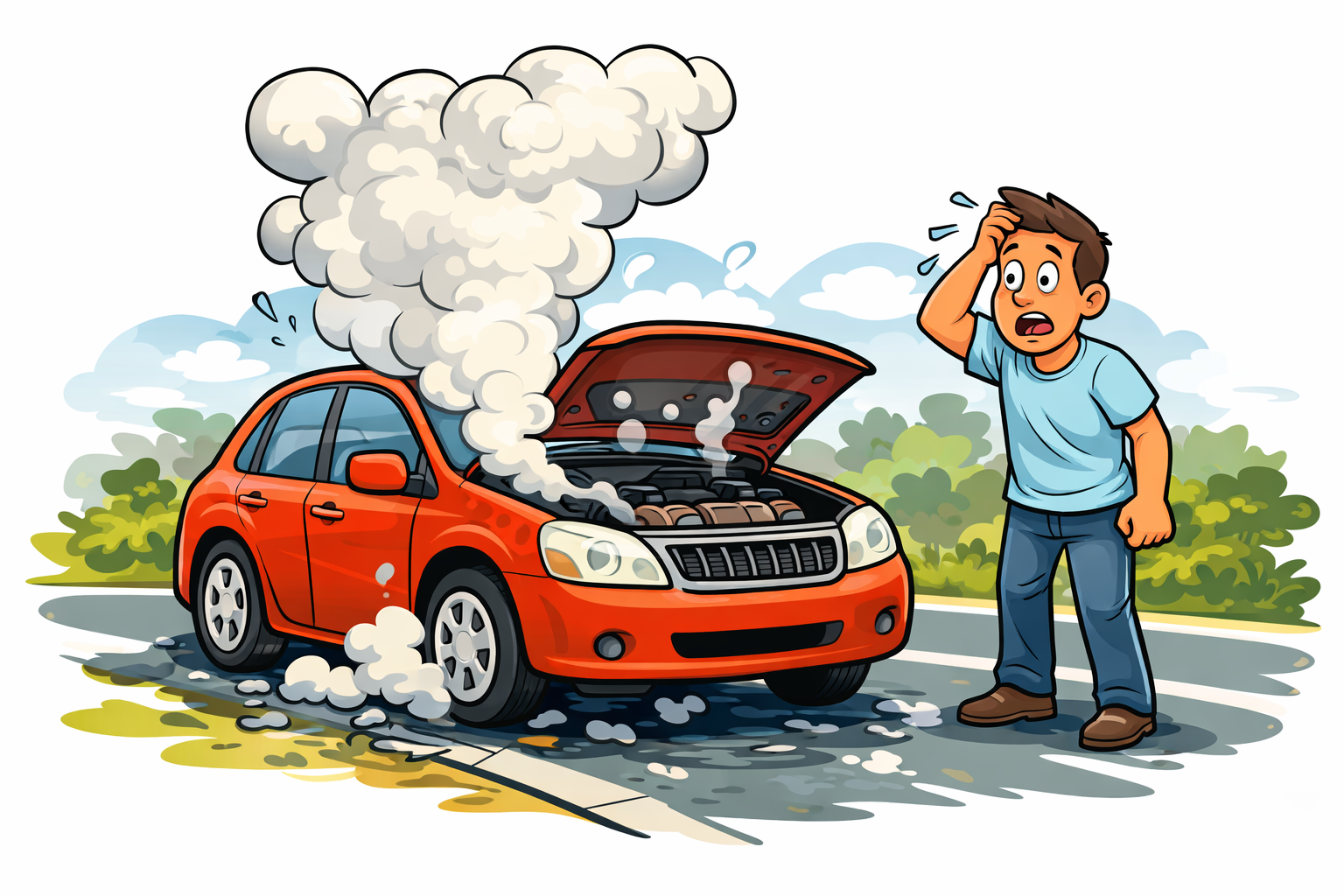
Engine overheating is one of those car problems most drivers really do not want to face. And for good reason — if an engine overheats, the consequences can be expensive. Sometimes it ends with a relatively simple repair, such as a thermostat or a coolant leak. In other cases, overheating can lead to a blown head gasket, a warped cylinder head, or even major engine damage.
The problem is that many people do not know how to react properly when the temperature gauge starts climbing. Some keep driving, hoping it will settle down on its own. Others rush to open the cooling system and risk serious burns. Some simply panic because they are not sure whether it is real overheating or just a temporary fluctuation.
In this article, we will look at the most common causes of engine overheating, the warning signs that usually come with it, what drivers can safely do themselves, and what they should never do. The goal is to help you react calmly and sensibly in a situation that can otherwise turn into a very expensive problem very quickly.
Why engine overheating is so dangerous
An engine operates at a high temperature, but that temperature has to remain within a certain range. The job of the cooling system is to keep the engine at a working temperature that is high enough for efficient operation, but not so high that it damages components.
When the temperature gets too high, metal parts expand more than they are supposed to. This can cause sealing problems, damage the head gasket, affect the properties of the engine oil, and put extra stress on the engine as a whole. The longer an overheated engine continues running, the greater the risk of serious damage.
| Situation | Risk level | What to do |
|---|---|---|
| Temperature slightly above normal | Medium | Reduce load, monitor it, look for a safe place to stop |
| Temperature rising quickly | High | Stop as soon as safely possible |
| Steam coming from the engine bay | Very high | Stop driving immediately |
Common signs that your engine is overheating
The most obvious sign is usually the temperature gauge on the dashboard. If it rises above its usual position or starts approaching the red zone, that is already a serious warning. In some cars, an overheating warning light may also appear.
Other signs can include steam from the engine bay, changes in cabin heater performance, an unusual smell, loss of engine power, or rough engine operation. Sometimes the driver simply notices that the car suddenly starts to smell “hot” or that something under the hood no longer feels normal.
It is important to understand that overheating does not always happen completely out of nowhere. In some cases, there may have already been signs for days or weeks — small coolant loss, unusual fan behavior, or temperature fluctuations.
1. Low coolant level
One of the most common causes of overheating is a coolant level that is too low. If there is not enough coolant in the system, heat cannot be carried away from the engine efficiently, and the temperature may rise quickly.
The coolant level may drop because of a leak, but sometimes people simply do not check it regularly and only notice a problem when it is already too late. A small leak may seem unimportant at first, but over time it creates a real risk.
If coolant keeps disappearing, topping it up is not enough on its own — the real cause needs to be found.
2. A leak in the cooling system
The cooling system contains several parts that can begin to leak — hoses, fittings, the radiator, the water pump, the expansion tank, or seals. Even a small leak can eventually lead to overheating, because the system can no longer maintain the correct pressure and coolant level.
Sometimes the leak is visible as wetness under the car or inside the engine bay. In other cases, coolant evaporates on hot components, and the only clue is a sweet smell or light steam.
These kinds of leaks should not be ignored, because they are often the beginning of larger problems.
3. A faulty thermostat
The thermostat controls coolant flow between the engine and the radiator. If it gets stuck closed and does not open properly, coolant cannot circulate through the radiator as it should, and the engine begins to overheat.
This problem can sometimes appear quite suddenly. The car may work normally for a long time, and then the temperature suddenly starts rising because the cooling system is no longer doing its job properly.
A faulty thermostat is a relatively small component, but the consequences can be severe if you continue driving.
4. The radiator fan is not working
The radiator fan is especially important in slow traffic, while idling, or when sitting in congestion. When there is not enough natural airflow, the fan helps cool the radiator. If it does not switch on, the temperature may begin to rise, especially in city driving.
Sometimes drivers notice that the temperature stays normal on the highway but rises in traffic or at red lights. That is a fairly typical symptom of a radiator fan or fan control issue.
The cause may be the fan itself, a fuse, relay, temperature sensor, or electrical wiring.
5. A faulty water pump
The water pump keeps coolant circulating through the system. If it is not working properly, coolant does not move efficiently enough, and heat is not carried away from the engine.
A faulty water pump can cause either slow or relatively sudden overheating. Sometimes it is also accompanied by a leak, unusual noises, or problems with the drive belt.
This is not usually something drivers check themselves immediately, but it is one of the key components in the system.
6. A clogged or damaged radiator
The radiator helps cool the coolant by transferring heat into the surrounding air. If it is clogged, damaged, or externally blocked by dirt and debris, airflow and cooling efficiency drop.
Over time, a radiator can suffer both from external dirt and internal deposits. This is especially relevant in cars where the cooling system has not been maintained properly or fluids have not been changed on time.
As a result, the engine may operate close to the overheating limit even if other parts of the system are still in relatively decent condition.
7. A head gasket problem
A blown or failing head gasket can be both a cause and a result of overheating. If the gasket no longer seals properly, coolant and combustion processes can start affecting one another, creating pressure issues, coolant loss, and rising temperature.
In these situations, you may notice white smoke, coolant loss with no obvious external leak, oil and coolant mixing together, or bubbling in the expansion tank.
This is already a more serious problem and should not be ignored, because continuing to drive can make the damage much more expensive.
8. Heavy load and hot conditions
Sometimes overheating is caused not by one single failed part, but by a combination of conditions — a hot summer day, long uphill driving, towing a heavy trailer, a fully loaded car, and slow-moving traffic. If the cooling system is already close to its limit, this extra load can quickly push the temperature too high.
That means even a car without an obvious fault may start overheating if the system is not in ideal condition. That is exactly why preventive maintenance matters so much.
In these cases, overheating is often the final sign that the cooling system had already been weak for some time.
What to do if the temperature starts rising
If you notice the temperature rising above its normal position, the first thing to do is reduce the engine load. Turn off the air conditioning, drive more gently, and look for a safe place to stop. If the temperature keeps rising, you should not continue driving any longer than is absolutely necessary to stop safely.
If your car has cabin heating, it can sometimes help to turn it on to maximum, because it pulls some heat away from the engine into the cabin. It is not a pleasant solution, but in an emergency it can buy you a little extra time.
Once you have stopped safely, switch off the engine and let it cool down. From that point, every step should be taken calmly rather than in a rush.
What you should never do
One of the most dangerous mistakes is opening the coolant reservoir cap or radiator cap immediately while the system is still hot and under pressure. This can cause hot coolant and steam to burst out and lead to serious burns.
You should also avoid continuing to drive for long in the hope that the temperature will drop by itself. If the engine is already overheating, every extra kilometer can make the damage worse.
You should never pour cold water directly onto a very hot engine either. Sudden temperature changes are not good for metal components and can cause additional damage.
What you can check once the engine has cooled down
Once the engine has cooled completely, you can carefully check the coolant level, look for visible leaks, wet areas, damaged hoses, or obvious deposits. If the coolant level is very low, that is already a clear sign that the system has a problem.
You can also check whether fluid has appeared under the car, whether there are obvious traces around the radiator or engine bay, and whether the cooling fan has been behaving strangely recently.
Still, even if everything looks normal again afterwards, a single overheating incident is already a good reason to have the car checked professionally.
When you need a tow truck, not another attempt to drive
If steam is coming from the engine bay, the temperature is extremely high, coolant has leaked out, the engine is running abnormally, or there are signs of a head gasket issue, the safest solution is usually a tow truck. In that situation, trying to “drive just a little farther” often turns into an expensive mistake.
If overheating has already happened once and the cause is still unknown, it is better not to take the risk. Sometimes the car may still drive for a while, but the problem may already be damaging the engine internally.
The cost of a tow truck is often far less than the cost of repairing a damaged engine.
How to reduce the risk of overheating in the future
The best way to avoid overheating is prevention. Coolant level should be checked regularly, any sign of leaks should be taken seriously, fluids should be changed on time, and temperature fluctuations or changes in heater performance should never be ignored.
If the car is older or has had cooling system issues before, a preventive inspection before summer or before a long trip is especially sensible. The same goes for situations where you plan to tow a trailer or drive under heavy load.
Overheating is rarely a “complete surprise.” Very often there were already small warning signs that simply were not noticed in time.
Conclusion
Engine overheating is a serious problem that should never be treated lightly. It can be caused by relatively simple things like low coolant or a faulty thermostat, but it can also be linked to much more serious faults such as a head gasket issue.
The most important thing is to react properly — reduce engine load, stop safely, never open a hot cooling system, and do not assume the issue will simply fix itself. The sooner the problem is assessed and repaired, the better the chance of avoiding larger costs.
If you want to better understand your car’s day-to-day running costs and how technical condition affects ownership, use the fuel calculator below.