
 LV
 EN
 RU
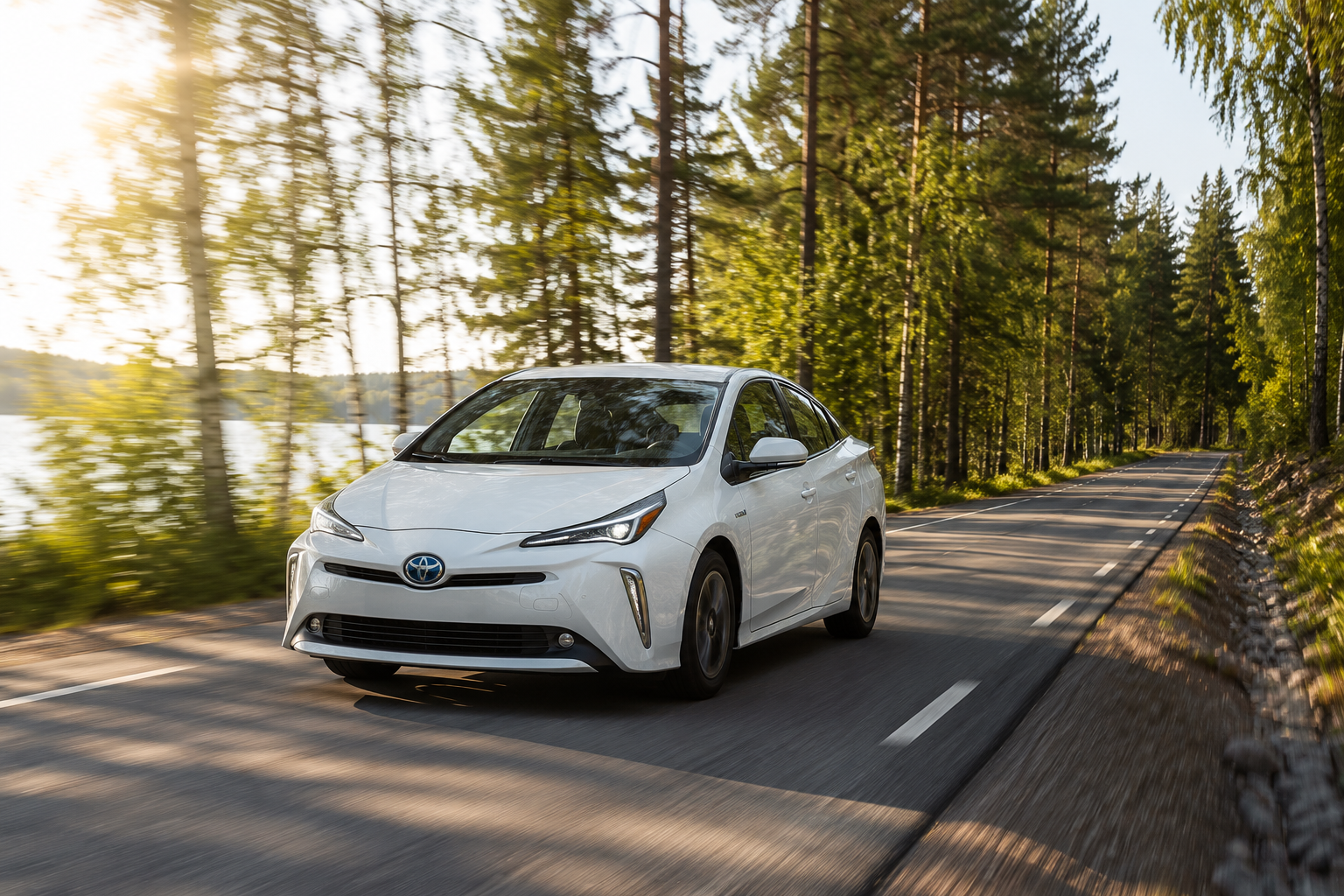
For many drivers, a hybrid seems like a simple answer to the fuel consumption problem. Buy a hybrid, drive as before, and the fuel consumption drops by itself. Sounds nice, doesn’t it? In reality, a hybrid really can be very economical, but it is not a magic trick. It is a car that works best when the driver understands its logic.
Quite often, someone buys a hybrid and then wonders: “Why am I not getting the low consumption figures everyone talks about?” The answer is not always a faulty car. Sometimes the problem is driving style, route, cold weather, tyre pressure, hard acceleration or the wrong attempt to force the car to drive electrically all the time.
The main idea of a hybrid is simple: the petrol engine and the electric motor work together. The electric motor helps in moments when the combustion engine would work hardest and least efficiently, for example when moving off or driving slowly in city traffic. During braking, part of the energy is recovered and stored in the battery. But for this to work well, the driver needs to drive smoothly and predictably.
In this article, we will look at how to drive a hybrid economically in everyday life. Not theoretically, but practically: in the city, in traffic jams, on the highway, in winter, on short trips and on longer routes. We will also look at the most common mistakes that make a hybrid use more fuel than it should.
The driver’s short takeaway right at the start: a hybrid saves the most fuel not when you constantly try to force it to drive electrically, but when you drive calmly, predictably and let the system intelligently divide the work itself.
Quick answer: how do you drive a hybrid economically?
The basic principle of economical hybrid driving is flow.
Move off gently, accelerate smoothly, look further ahead, brake early and let the car recover energy as often as possible. A hybrid really does not like hard throttle, late braking and nervous stop-start driving.
The best result usually comes not from “slow crawling”, but from calm, predictable and steady movement.
If you drive a hybrid like an ordinary petrol car — accelerate hard, brake late, keep a high speed on the highway and rush from one traffic light to the next in the city — consumption will not be as low as it could be. A hybrid helps, but it cannot completely fix the driver’s habits.
Why is a hybrid often more economical in the city?
Hybrids usually show their strongest side in the city. Why? Because city driving has many situations where a normal petrol car uses more fuel: moving off from a stop, slow movement, braking, traffic jams, short accelerations and frequent stops.
In these situations, a hybrid can use the electric motor, temporarily switch off or reduce the load on the petrol engine and recover energy during braking. This means that in the city, a hybrid can use exactly those situations where a normal car usually loses fuel.
However, this does not mean that a hybrid will always automatically use very little fuel in the city. If the driver drives aggressively, often floors the accelerator and brakes at the last moment, the system has fewer chances to work efficiently. A hybrid is not permission to drive chaotically. It is a car that rewards calm driving very well.
Simply put:
A normal petrol car often loses energy in the city when braking.
A hybrid can recover part of that energy.
The calmer and more predictably you brake, the better the hybrid can use its advantage.
Why does a hybrid not always impress on the highway?
Many drivers expect a hybrid to be very economical in every situation. In the city, it often really is impressive, but on the highway the result can be more modest. That does not mean the hybrid is bad. It means the rules of the game change on the highway.
On the highway, the car drives at a steady speed for longer. There is less braking and fewer chances to recover energy. The electric motor can still help, but the petrol engine often does most of the work. If the speed is high, air resistance, tyres, vehicle shape and total load become very important.
That is why a hybrid may not be as economical on the highway as it is in the city. If you drive very fast, even hybrid technology cannot fully compensate for physics. Air resistance increases, the engine has to work harder and consumption rises.
A typical hybrid owner’s experience: “In the city, consumption is pleasantly low, but on the highway I realised that a hybrid is still a car — if I drive fast, it uses more.”
The golden rule of hybrid driving: anticipate, do not react
Economical hybrid driving starts not with buttons, but with looking ahead. The earlier you notice a traffic light, a traffic jam, a bend or a car braking ahead, the easier it is to reduce speed calmly. This gives the hybrid more opportunity to recover energy and reduces the need for sudden braking.
If you drive in a way where you are constantly reacting at the last moment, it is harder for the hybrid to be economical. You accelerate sharply, then brake sharply. Some energy is recovered, but not all of it. Aggressive driving also puts more load on tyres, brakes and passengers’ nerves.
Predictable driving does not mean driving extremely slowly. It means driving smartly: keeping distance, reading traffic several cars ahead, lifting off the accelerator early and letting the car coast or regenerate instead of pressing the brake at the last second.
A small habit that helps a hybrid:
When you see that the traffic light ahead is already red or traffic is stopping, lift off the accelerator earlier. You not only save fuel, but also give the car more time to recover energy.
Common mistakes that increase hybrid fuel consumption
A hybrid can forgive quite a lot, but some mistakes quickly ruin fuel consumption. The good news: most of them can be fixed without a service visit, without extra cost and without new technology.
| Mistake | Why does it increase consumption? | What to do differently? |
|---|---|---|
| Hard acceleration from a stop | The petrol engine has to join in more often under higher load | Move off smoothly and let the electric motor help |
| Late and harsh braking | Less time for regeneration, more energy lost as heat | Brake earlier and more gently |
| Overusing EV mode | The battery may drain quickly, then the engine has to recharge it | Let the car choose the mode itself unless there is a specific situation |
| Too much speed on the highway | Air resistance and petrol engine load increase | Drive at a sensible, stable speed |
| Short trips with a cold car | The system does not have time to reach an efficient operating state | Combine short trips when possible |
EV mode: when does it help and when does it get in the way?
Many hybrid drivers really want to see the car driving electrically. It feels nice: silence, low consumption on the display and the feeling that no fuel is being used. But there is a tricky detail here — it is not always beneficial to force a hybrid to drive electrically for as long as possible.
If the battery is drained quickly, the petrol engine later has to work harder to recharge it. This means the apparent saving may simply move to the next section of the trip. That is why, in many cases, it is better to let the hybrid system decide for itself when to use electricity and when to use the petrol engine.
EV mode can be useful in very short, slow sections: in a car park, in a courtyard, while entering or leaving calmly, or in a short zone with very low speed. But if you try to drive as far as possible in EV mode at any cost, that will not always be the most economical solution.
Practical thought: electric driving in a hybrid is a tool, not the goal. The goal is lower total consumption over the whole trip, not seeing the EV symbol on the screen for as long as possible.
Regeneration: the hybrid’s big advantage
Regeneration means that during braking or slowing down, the car tries to recover part of the energy and store it in the battery. In a normal car, much of this energy simply turns into heat in the brakes. A hybrid can use part of it later.
However, regeneration works best when braking is calm and predictable. If you brake very sharply, the system may not be able to recover everything, and the conventional brakes have to do more work. That is why economical hybrid driving means not only “less throttle”, but also “smarter braking”.
A good hybrid driver often drives in a way where the brake pedal is used calmly and early. Not because the driver is crawling, but because they read the traffic ahead and do not build up unnecessary speed that will need to be removed immediately.
The golden rule of regeneration:
The earlier and more smoothly you reduce speed, the more chance the hybrid has to recover energy. The later and harder you brake, the more energy is lost.
City, highway and mixed driving: how should your driving change?
| Driving environment | What does a hybrid like? | What to avoid? | Practical tip |
|---|---|---|---|
| City | Gentle starts, early braking, regeneration | Rushing between traffic lights | Look further ahead and do not build unnecessary speed |
| Traffic jams | Slow, flowing movement without unnecessary acceleration | Accelerating and braking sharply every few metres | Keep distance and roll calmly |
| Highway | Stable, sensible speed | Very high speed and frequent overtaking | Do not fall into the illusion that a hybrid will compensate for any speed |
| Mixed route | Predictable transition between city and faster road | Aggressive acceleration after every slow zone | Use the city for energy recovery and drive steadily on the highway |
In winter, a hybrid may use more fuel — that is normal
In winter, hybrid fuel consumption often rises. That does not mean the car has suddenly become bad. In cold weather, the engine needs to warm up, the cabin needs heat, the windows need defrosting, the tyres are winter tyres and road conditions are often heavier. All of this affects consumption.
Also, a hybrid cannot always drive electrically as much if the system needs to provide cabin heat or keep the engine at operating temperature. On short winter trips, consumption can be especially high because the car does not have time to warm up and use its advantages efficiently.
The best thing to do in winter is not to be angry at the hybrid, but to adjust habits: combine short trips, avoid setting the cabin temperature excessively high, check tyre pressure and drive even more smoothly than in summer.
Winter principle: if a hybrid uses more fuel in winter than in summer, that is often normal. It is more important to check whether the consumption is not unusually high and whether there are no technical problems or poor habits involved.
Practical example: two hybrid drivers, the same car
Imagine two drivers with a similar hybrid and a similar route. One drives calmly, reads the traffic ahead and brakes early. The other drives like in a normal petrol car: accelerates hard, quickly catches the next traffic light and brakes at the last moment.
| Driver type | Driving style | Hybrid system opportunities | Result |
|---|---|---|---|
| Calm driver | Smooth throttle, early braking, good distance | More regeneration, more frequent electric assistance | Lower and more stable consumption |
| Rushed driver | Hard throttle, late braking, short following distance | Less time for regeneration, higher engine load | Higher consumption, even with the same car |
This is one of the reasons why two people with a similar hybrid can have very different fuel consumption. The technology is the same, but driver habits can completely change the result.
Simple cost formula:
Fuel cost per 100 km = consumption l/100 km × fuel price
Example: if one driver uses 4.8 l/100 km and another uses 6.0 l/100 km, the difference is 1.2 litres per 100 km.
At €1.70/l, that means a €2.04 difference for every 100 km. Over a month and a year, this difference becomes much more visible.
Should Eco mode always be used in a hybrid?
Many hybrids have an Eco mode, and it can help you drive more calmly. Usually, it softens accelerator pedal response, sometimes adjusts the climate system and helps the driver avoid sharp acceleration.
However, Eco mode is not a magic button. If the driver continues to press the accelerator aggressively, brake late and drive at high speed, Eco mode will not perform miracles. It supports good habits, but it does not replace them.
For daily city driving, Eco mode is often a good choice. On the highway or in situations where safe and quick acceleration is needed, the normal mode may be more suitable. The key is to understand that the mode is an assistant, not a fuel economy guarantee.
Should you drive as slowly as possible in a hybrid?
No. Driving too slowly can disturb traffic and does not always give the best consumption. Economical driving means smooth, predictable and safe driving, not unnecessarily slow movement.
Do you need to deliberately “charge” a hybrid while driving?
In a normal self-charging hybrid, the driver usually does not need to think about battery charging as a separate task. The system manages charging and discharging itself. The driver’s job is to drive smoothly so the system has a chance to work efficiently.
Why does the petrol engine sometimes turn on even when the battery is not empty?
This can happen for several reasons: more power is needed, the engine needs to warm up, cabin heating is required, the system needs to maintain its operating state or the battery needs to be protected. It does not always mean there is a problem.
Mini test: are you driving your hybrid economically?
Answer honestly. If the answer to several questions is “yes”, your hybrid may be able to use less fuel without changing the car or repairing anything.
Hybrid driving mini test:
1. Do you often accelerate hard from traffic lights?
2. Do you brake at the last moment instead of early?
3. Do you try to drive in EV mode at any cost?
4. Do you drive significantly faster on the highway just because the car “is still a hybrid”?
5. Do you rarely check tyre pressure?
If you answered “yes” to at least 3 questions, it is worth changing habits and comparing consumption over a week.
7-day experiment: reduce hybrid consumption without a service visit
To understand how much your driving style affects hybrid consumption, try a simple 7-day experiment. The goal is not to drive excessively slowly. The goal is to drive more smoothly and see what it does to consumption.
| Day | What to do? | What to write down? |
|---|---|---|
| Day 1 | Write down your usual consumption and route | Average consumption, trip length, traffic |
| Day 2 | Move off more gently than usual | Does hard engine engagement reduce? |
| Day 3 | Brake earlier and more calmly | Is the regeneration indicator used more often? |
| Day 4 | Keep a larger distance from the car ahead | Does driving become smoother? |
| Day 5 | Do not force EV mode unnecessarily | Does overall consumption become more stable? |
| Day 6 | Drive at a stable, sensible speed on the highway | Consumption on the highway section |
| Day 7 | Compare with Day 1 | Consumption difference and driving feel |
Important: compare similar routes and similar conditions. If one day you drive on an empty road and another day you sit in traffic, the result will not be fair. It is best to test on the same everyday route.
Practical tip: even if the consumption difference is not huge, you may gain calmer driving, less stress and smoother car operation. That is also a valuable result.
Myths and truth about hybrid driving
| Myth | Truth | What does it mean in practice? |
|---|---|---|
| A hybrid always saves fuel by itself | It helps, but driving style is still very important | Drive calmly and predictably |
| The more I drive in EV mode, the better | Not always. Total trip consumption matters | Do not force electric mode unnecessarily |
| A hybrid will use as little fuel on the highway as in the city | On the highway, the advantage is often smaller | Control speed and drive steadily |
| Regeneration recovers all energy | It recovers only part of it | It is better not to build up unnecessary speed that must immediately be removed |
| A hybrid should not use more fuel in winter | Consumption usually increases in cold weather | Look at habits and technical condition, not only the season |
Tyres, weight and climate: a hybrid still follows normal physics
Sometimes people focus so much on hybrid technology that they forget ordinary car factors. Tyre pressure, tyre type, extra weight in the boot, roof box, air conditioning, cabin heating and technical condition all affect a hybrid too.
If tyre pressure is too low, the car will roll with more resistance. If the boot is full of unnecessary things, every city start will require more energy. If a roof box remains on the car after a trip, aerodynamics on the highway will be worse. A hybrid helps, but it does not make physics disappear.
That is why economical hybrid use is not only about pedals. It is a complete approach: correct tyres, an organised car, calm driving style and a sensible route.
Remember: a hybrid is a smart car, but it is not a miracle cure for underinflated tyres, a full boot, high speed and aggressive driving.
A simple action plan for hybrid drivers
If you want to reduce hybrid consumption, start with this:
1. Check tyre pressure.
2. Remove unnecessary weight from the car.
3. Move off more calmly.
4. Brake earlier to use regeneration better.
5. Do not force EV mode without need.
6. Keep a stable, sensible speed on the highway.
7. Compare consumption for at least a week, not after one trip.
When can high consumption indicate a problem?
High hybrid consumption is not always only about driving style. If consumption has suddenly increased significantly and cannot be explained by winter, a different route, tyre change, higher speed or a more loaded car, it is worth checking the technical condition.
There can be many reasons: low tyre pressure, slightly dragging brakes, sensors, ignition or fuel system issues, an ageing 12V battery, climate system load or other technical details. A hybrid is more complex than a very simple car, so unusual long-term consumption should not be ignored.
Important: if consumption rises suddenly, the car behaves differently, warnings appear on the dashboard or you notice unusual vibrations, sounds or smells, do not simply assume “hybrids do that”. It is better to have the car checked at a service centre.
Conclusion: a hybrid saves best when the driver cooperates with it
A hybrid can be a very economical car, especially in the city and on mixed routes. But it is not a car that completely removes responsibility from the driver. The technology helps, but it gives the biggest benefit when the driver drives calmly, predictably and lets the system work in its best operating range.
Economical hybrid driving is not complicated. Move off gently. Brake early. Do not force EV mode unnecessarily. Do not build up unnecessary speed before traffic lights. Drive steadily on the highway. Check tyres. Do not carry unnecessary weight. These simple habits often help more than constantly watching the display.
If you want to understand how much you can save with your own car, try the 7-day experiment. A hybrid quickly shows when the driver is working against the system and when they are working with it.
The driver’s final takeaway: hybrid economy is not only in the battery and electric motor. It is also in your right foot, your view ahead and your ability to drive calmly.