 LV
 EN
 RU
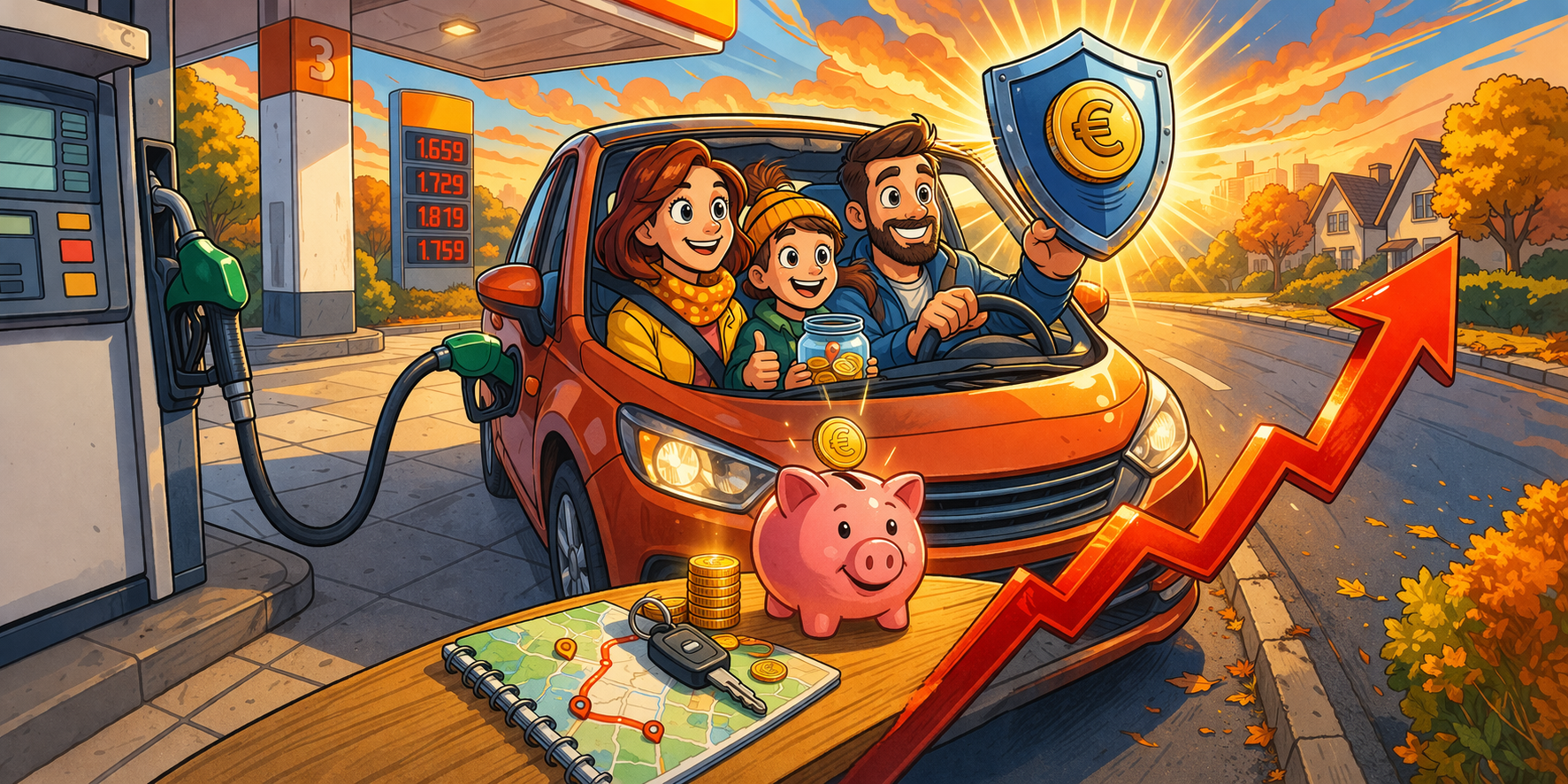
There are topics that don’t enter family conversations through big debates — they arrive through one small, very familiar moment. You pull up to a fuel station, glance at the price board, and for a split second, there’s that quiet irritation almost every driver knows. Not because fuel is expensive for the first time in your life. But because you immediately understand what that price actually means. It’s not just one refill. It’s work commutes, school runs, grocery trips, weekend plans, visiting relatives — and that uncomfortable feeling that your family budget is about to stretch a little tighter again.
That’s why the question “how do you protect your family budget from fuel price shocks?” is not just a car question. It’s a household question. Because fuel costs rarely rise alone. They usually come together with other pressures — food, bills, loans, everyday expenses that quietly add up. And suddenly even a well-managed household starts to feel more sensitive.
The worst part about fuel price shocks is not just the price itself. It’s the feeling of having no control. That something is happening somewhere far away — and you’re the one paying for it. And yes, you can’t control global markets. But that doesn’t mean you’re powerless. In fact, there are many small, practical things families can do to reduce the impact of these shocks.
This article is about exactly that. No unrealistic advice. No “just drive less” solutions — because people drive because they have lives. But between complete helplessness and total control, there’s a wide middle ground where smart habits can make a real difference.
First key idea: fuel is not just a car expense — it’s a household stress point
One of the biggest mistakes people make is treating fuel as an isolated car expense. In reality, nothing in a family budget is isolated. When fuel becomes more expensive, it reduces flexibility elsewhere. It affects choices, plans, and comfort.
Families that handle fuel price shocks best are often not the ones earning the most — but the ones who understand that car costs are part of a bigger financial system. Fuel is not random. It’s a recurring, predictable part of life.
A very real insight: “I used to think fuel was just a car expense — then I realized every price increase affects half my monthly budget.”
The biggest mistake: reacting too late
Fuel price shocks always feel sudden. Even when the signs were there. Most families start reacting only when prices are already painful. And that’s when decisions become rushed and emotional.
Smarter households do something different. They assume price volatility is normal — and build small protections before things get uncomfortable.
This doesn’t require drastic changes. It’s about habits. When your daily system is organized, price increases are still annoying — but not destructive.
Route planning is more powerful than people think
When people think about saving fuel, they often focus on price or engine efficiency. But a huge part of savings comes from how you drive — not just how much your car consumes.
Unplanned driving is expensive. Multiple small trips that could have been combined are one of the biggest hidden costs in everyday life.
One parent drives in the morning. Another later goes out again. Then a third trip happens in the evening. Individually, none of these seem like a problem. Together, they quietly drain both fuel and money.
Smarter planning doesn’t mean strict discipline. It means thinking slightly ahead. What can be combined? What can wait? These small questions often matter more than chasing a cheaper fuel station.
“We kept looking for cheaper fuel — until we realized we were wasting more by driving inefficiently.”
Carpooling is not idealistic — it’s practical
Carpooling often sounds like a “nice idea” rather than a real solution. But during price shocks, it becomes very practical.
It doesn’t have to be perfect. Even one or two shared trips per week can make a difference. Commuting with colleagues, sharing school routes, coordinating family schedules — small overlaps can create real savings.
It’s not about changing your entire lifestyle. It’s about reducing unnecessary duplication.
Car condition matters more when fuel is expensive
Many drivers underestimate how much a poorly maintained car increases fuel costs. When prices rise, inefficiencies become much more noticeable.
Incorrect tire pressure, misalignment, clogged filters, delayed maintenance — all of these quietly increase consumption.
When fuel is cheap, this is inefficient. When fuel is expensive, it’s painful.
“When fuel prices went up, I realized how expensive my laziness with maintenance had been.”
Smart fueling is about total cost — not lowest price
Chasing the lowest price per liter can sometimes backfire. Driving extra distance just to save a few cents often cancels out the benefit.
The smarter approach is combining price with your natural route. If a cheaper station is on the way — great. If not, the savings may not be real.
The same applies to loyalty programs — they work best when they fit your routine, not when you change your routine for them.
Small habits beat big ideas
People often look for one big solution. But in reality, protection comes from small habits: avoiding unnecessary idling, combining trips, maintaining your car, driving smoothly.
These are not exciting ideas. But they work.
“Fuel price shocks don’t hurt because of one mistake — they hurt because of many small ones.”
Car choice is long-term protection
Your car is not just a vehicle — it’s a cost structure. Choosing a car that fits your real driving habits is one of the strongest ways to protect your budget.
Many people buy based on emotions, not reality. And fuel price shocks quickly expose that mismatch.
Should you build a “fuel buffer” in your budget?
Even a small financial buffer can reduce stress during price spikes. Not necessarily a formal fund — but at least awareness of how sensitive your budget is to fuel costs.
Households without any buffer feel every increase immediately. Those with even a small margin handle it better.
Conclusion
You can’t eliminate fuel price shocks. But you can reduce how much they hurt.
The key is not one perfect solution — but a system of smarter habits: planning, maintenance, realistic choices, and small daily discipline.
If you want to understand how fuel prices affect your real costs, use the calculator below.