
 LV
 EN
 RU
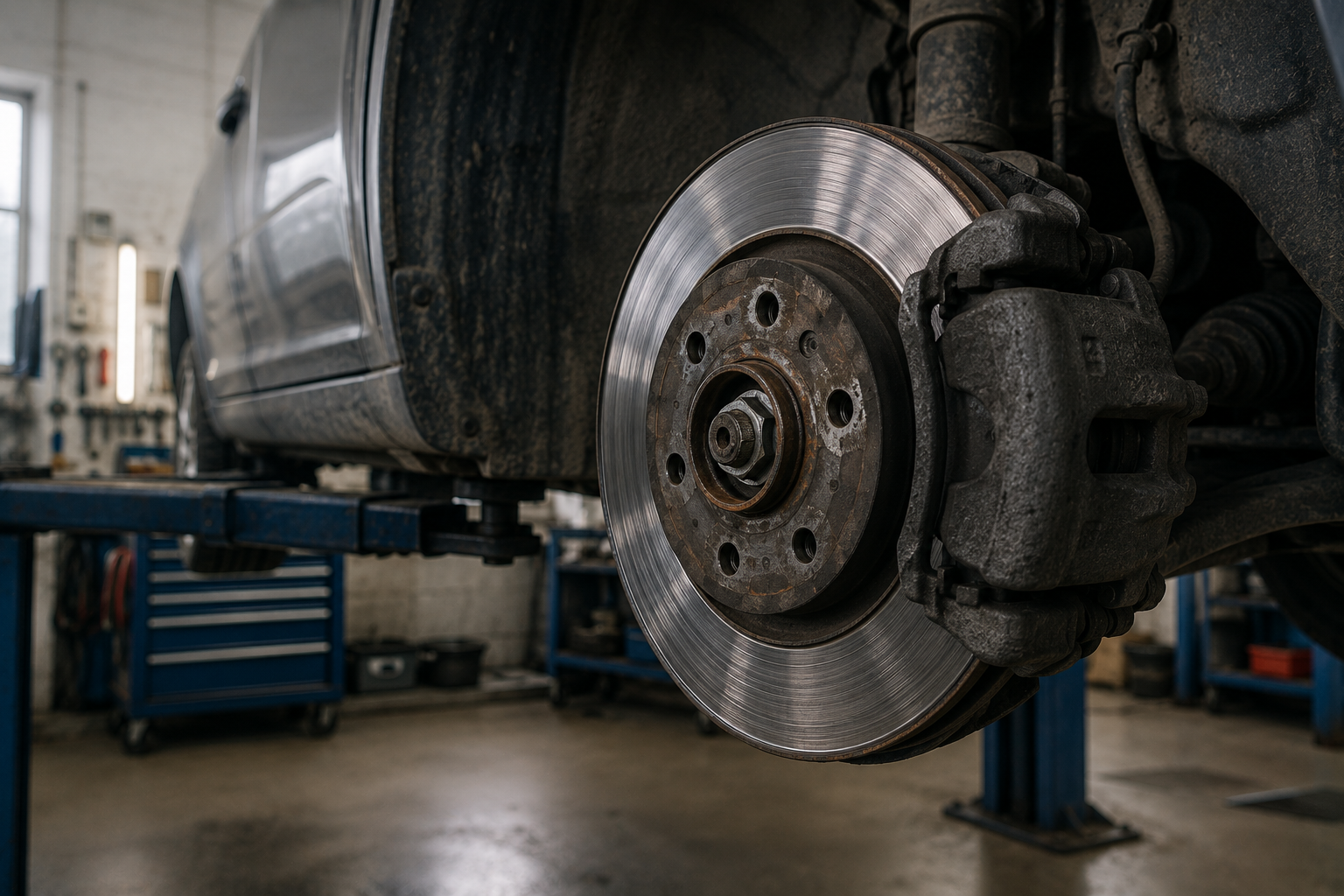
You approach a junction, gently press the brake pedal and hear a high-pitched squeal for the first time. The sound returns at the next junction, although the car stops normally. A few days later, the squealing is accompanied by slight vibration through the steering wheel, while the pedal feels a little softer than before.
At this point, many drivers tell themselves that the brakes are simply wet, the discs have developed surface rust while parked or the new pads have not yet bedded in. Sometimes that is true. In other cases, a minor sound is the first warning of a worn pad, seized calliper, damaged disc or brake-fluid leak.
Brake-system problems differ from many other vehicle faults. You can drive to a workshop with a broken air conditioner. A worn cabin blower can wait for several days. With brakes, a poor decision may mean that the car does not stop where expected at the next junction.
It is therefore important not only to hear the sound, but to assess the complete set of symptoms: pedal feel, stopping distance, the direction in which the car moves, vibration, smell, warning lights and brake-fluid level.

Brake noise alone does not reveal the cost of the repair, but a soft pedal, fluid loss, the vehicle pulling to one side or a suddenly increased stopping distance are not symptoms that should be postponed until the next scheduled service.
How does a car’s braking system work?
When the brake pedal is pressed, the driver creates pressure in the hydraulic system through the brake master cylinder. The brake fluid carries this pressure to the wheels.
In disc brakes, the calliper presses the pads against the rotating disc. Friction reduces the wheel’s rotation speed and converts the vehicle’s kinetic energy into heat. In drum brakes, similar work is performed by brake shoes pressed against the inner surface of the drum.
In a modern vehicle, the mechanical and hydraulic systems are supported by ABS, electronic stability control, brake-force distribution and, in some models, automatic emergency braking. Electronics cannot, however, compensate for completely worn pads, a brake-fluid leak or a failed hydraulic component.
The service brakes, ABS and parking brake are interconnected, but their construction may differ. An electronic parking brake may use electric motors on the rear callipers, while another vehicle may have separate brake shoes or a mechanical cable.
Which brake symptom is the most dangerous?
Not every sound requires an immediate stop, but certain symptoms mean that the journey should be ended rather than attempting to drive carefully to a workshop.
Light squealing that occurs only in wet weather or after the vehicle has been parked for a long time and disappears after several gentle braking applications.
If the sound returns on every journey, arrange an inspection rather than waiting for the next scheduled service.
Moderate vibration, slight pulling to one side, continuous squealing or one wheel becoming noticeably hotter after driving.
Avoid fast traffic, long descents and hard braking. Stop if the symptom becomes worse.
The pedal falls almost to the floor, braking force suddenly decreases, a fluid leak is visible, loud metallic grinding is heard or a red brake warning light appears.
The vehicle should be transported to a workshop by roadside assistance or recovery truck.
What does brake squealing mean?
Squealing is caused by high-frequency vibration between the pad, disc, calliper and mounting components. The sound alone does not always mean that the pads are completely worn.
After rain or a car wash, a thin layer of surface corrosion may develop on the disc. It is removed during the first braking applications and can create a temporary sound. New pads and discs may also require a bedding-in period.
Persistent squealing may be caused by a wear indicator, hardened or overheated pad material, dirt, incorrectly installed anti-vibration components, poor-quality parts or a calliper that prevents the pad from moving freely.
Metallic grinding is not ordinary squealing
If rough grinding or metal-on-metal noise is heard while braking, the pad’s friction material may have worn away and its backing plate may already be contacting the disc. Every braking application can then damage the disc and increase the repair cost.
The sound may also be caused by a stone trapped between the disc and dust shield or by a bent dust shield. This can only be confirmed safely through inspection.
Why does the steering wheel or pedal vibrate while braking?
Vibration through the steering wheel is usually more noticeable when the problem is on the front axle. Pulsation through the pedal or body may also be connected with the rear brakes, hub surface, suspension or wheels.
People often say that a brake disc is “warped”. In reality, vibration may be caused by uneven disc thickness, uneven transfer of pad material onto the disc, corrosion, overheating, incorrect wheel-bolt tightening or a dirty hub surface.
If the vibration is also present without braking, the wheel balance, tyres, wheels and suspension should be checked. If it appears only when the brake pedal is pressed, attention should first be given to the braking system and wheel hubs.
Normal ABS operation should not be confused with a fault-related vibration
During hard braking on a slippery surface, ABS can cause rapid pedal pulsation and a characteristic sound. This is normal system operation. Vibration that repeatedly occurs during gentle braking on a dry road requires inspection.
Why does the car pull to one side while braking?
Pulling means that equal braking force is not being generated on the left and right sides, or that the car’s direction is being affected by the tyres or suspension.
The cause may be a seized calliper piston, corroded guide pins, a damaged brake hose, a pad contaminated with fluid or grease, unevenly worn discs, different tyre pressures or a suspension fault.
Strong and sudden pulling is dangerous because the vehicle may unexpectedly change direction during emergency braking. It should be inspected before a longer journey or driving at higher speed.
A soft, hard or slowly sinking brake pedal
Possible causes include air in the hydraulic system, a fluid leak, deteriorated brake fluid, an expanding hose or another hydraulic problem.
If the pedal continues moving down while steady pressure is applied, there may be a hydraulic leak or an internal problem with the master cylinder.
There may be a fault with the brake booster, vacuum supply or another assistance system. The brakes may still work, but much greater pedal force will be required.
Pedal feel differs between vehicles, so the most important warning sign is a sudden change compared with the normal behaviour of that particular car.
Pumping the pedal is not a repair
If the pedal becomes firmer after several presses, the system may still contain air, excessive component movement or another fault. This symptom is not a reason to continue normal everyday driving.
What does the brake-fluid level indicate?
The brake-fluid reservoir is usually located in the engine compartment near the brake master cylinder. The level should remain between the marked limits, but simply adding more fluid is not always the correct solution.
As the brake pads wear, the calliper pistons extend further and the fluid level in the reservoir may gradually fall. A sudden drop or wet areas near a wheel, beneath the vehicle or on the brake lines may indicate a leak.
Only fluid meeting the specification required by the particular vehicle should be used. Compatibility between different classes and types must not be determined by colour or assumption.
Why is brake fluid replaced?
Many brake fluids absorb moisture during use. As the moisture content increases, the fluid’s boiling point falls and the risk of corrosion inside the system may increase.
During intensive braking, especially on a long descent or with a heavily loaded vehicle, the brakes become extremely hot. If the fluid begins to boil, compressible vapour bubbles can form and the pedal may become soft.
The replacement interval should be checked in the maintenance schedule for the specific vehicle. If the service history is unknown, a workshop can assess the fluid’s condition and inspect the system for leaks at the same time.
Why does one wheel become extremely hot?
If one wheel is significantly hotter than the others after a short and gentle drive, the brake may not be releasing fully. This can be caused by a seized calliper piston, corroded guide pins, a damaged hose or the parking-brake mechanism.
A dragging brake increases fuel consumption, overheats the disc and pads, may damage the wheel bearing and can cause the car to pull. Severe overheating may produce visible smoke or a sharp burning smell.
Do not touch a hot disc or calliper. Pouring water over a severely overheated disc is also not a good solution, because the rapid temperature change may cause additional distortion or cracking.

Red brake warning light, ABS and stability control
A red brake warning may indicate an applied parking brake, low fluid level or another service-brake system problem. If the light does not go out after the parking brake has been fully released, the journey should not continue until the cause is understood.
A yellow ABS light usually means that the anti-lock function has been disabled or a fault has been stored in the system. Normal hydraulic braking may remain available, but the wheels may lock during hard braking and some stability functions may not operate.
An ABS fault may be caused by a wheel-speed sensor, damaged sensor ring, wiring, low voltage or a control-unit problem. A component should not be replaced based on the warning light alone — the fault codes must be read and the system tested.
Check the parking brake and fluid level. If the cause is not obvious or the pedal feel has changed, do not continue driving.
Drive carefully and arrange diagnostics. The vehicle may behave differently on a slippery road or during emergency braking.
How should new brake pads and discs be bedded in?
New components need to establish an even working contact. The exact procedure depends on the component manufacturer, so the instructions supplied with the parts and the workshop’s recommendations should be followed.
During the first kilometres, avoid repeated very hard braking unless necessary. After intensive braking, avoid holding the pedal firmly down for a long time if the hot pads remain pressed against one position on the disc.
After a repair, the pedal must be made firm before the vehicle begins moving. The workshop should carry out a safe test and verify the fluid level, system sealing and correct wheel-bolt tightening.
Can brake discs be replaced on only one side?
Brake components on the same axle should operate similarly on the left and right sides. Pads are therefore normally replaced as a complete axle set, and discs are also usually replaced in pairs.
A combination of one new disc and one heavily worn disc may create different braking forces, temperatures and bedding behaviour. Any exceptional decision should be based on the manufacturer’s technical information and measurements, not solely on the external appearance of a component.
Can old brake discs be resurfaced?
Some discs can be machined if they remain above the manufacturer’s minimum thickness after resurfacing and have no cracks, severe corrosion or other damage.
The remaining component life, price of new discs, labour costs and the possible cause of the vibration should all be considered. If the problem was caused by a dirty hub surface or a seized calliper, machining the disc surface alone will not remove the underlying cause.
Brakes after prolonged parking
After a vehicle has been parked for several days or weeks, surface rust may form on the discs. Grinding may be heard and slight pulsation may be felt during the first braking applications.
If the symptoms disappear quickly, this may be normal. If the corrosion is deep, the pads have stuck to the discs, the parking brake does not release or the vibration remains, an inspection is required.
Initially test a vehicle that has been parked for a long time at very low speed in a safe location. Before entering busy traffic, confirm that the pedal is firm and the braking is even.
Why can a cheap brake-pad replacement become expensive?
The quality of a repair is not determined only by the price of the new brake pads. The disc thickness and surface, calliper-piston movement, guide pins, dust boots, hoses, mounting components and hub condition must also be checked.
If new pads are installed in a seized calliper, they can overheat quickly and wear unevenly. If the disc is below its minimum thickness or severely corroded, new pads cannot restore its mechanical service life.
Assume that timely replacement of the front brake pads and servicing of the system would cost €180. By continuing to drive until metallic grinding appears, both discs are damaged, a calliper overheats and roadside assistance is required.
The figures are illustrative and are not a quotation from a specific workshop. Actual costs depend on the vehicle, components and extent of the damage.
What is checked during a vehicle inspection?
During a vehicle inspection, the operation of the service brake and parking brake, braking force, differences between wheels on the same axle, the condition of visible components and the warning systems are assessed.
A vehicle may appear acceptable in daily driving, but measurements may reveal an excessive difference in braking force between the left and right wheels. Before an inspection, it is therefore worth checking not only the remaining pad thickness, but also calliper movement, brake pipes, hoses and the parking brake.
Passing a vehicle inspection does not mean that the brakes will require no maintenance until the next inspection. Pads and discs are wear components whose service life depends on driving conditions.
How should the brakes be checked before buying a used car?
- whether the pedal is firm and does not change position when held down;
- whether the vehicle maintains a straight direction while braking;
- whether there is vibration through the steering wheel, pedal or body;
- whether metallic noises, squealing or a burning smell are present;
- whether the discs have deep grooves, cracks or severe corrosion;
- whether the pads on all wheels have worn evenly;
- whether the brake and ABS warning lights go out after starting;
- whether the parking brake holds the vehicle and releases completely;
- when the brake fluid was last replaced and which repairs are documented.
Carry out the test drive in a safe location and according to traffic conditions. Testing the brakes does not mean performing unnecessary emergency stops on a public road.
What should you ask the workshop?
☐ What is the remaining brake-pad thickness?
☐ What is the measured disc thickness?
☐ Have the discs reached the minimum limit?
☐ Do the calliper pistons and guide pins move freely?
☐ Are the hoses free from cracks or swelling?
☐ Is there any fluid leakage in the system?
☐ When was the brake fluid replaced?
☐ Does the system need to be bled?
☐ Are the discs definitely the cause of the vibration?
☐ Has the hub surface and bearing been inspected?
☐ Does the electronic parking brake require a service procedure?
☐ What warranty applies to the parts and labour?
Driver’s checklist
☐ The pedal has not suddenly become soft
☐ The pedal does not sink while being held down
☐ No red brake warning is present
☐ The fluid level has not dropped suddenly
☐ There is no fluid leak beneath the vehicle
☐ The car does not pull to one side while braking
☐ There is no loud metallic grinding
☐ No new vibration is present through the steering wheel or pedal
☐ One wheel has not overheated after driving
☐ There is no strong burning smell or smoke
☐ The parking brake releases completely
☐ A brake inspection has not been delayed because the noise was ignored
A short self-check
The brakes briefly squeal after overnight rain, but the sound disappears. Is a recovery truck needed immediately?
Usually not, provided the pedal, braking force and direction of the vehicle remain normal. If the sound does not disappear or returns on every journey, arrange an inspection.
The pedal slowly sinks while the car is stationary. Can it be driven to a workshop?
No. This may indicate a hydraulic-system or master-cylinder problem. Using roadside assistance is safer.
The ABS light is on, but the normal brakes seem fine. Can the problem be ignored?
No. The anti-lock function and some stability systems may not operate. Drive carefully and arrange diagnostics soon.
One front wheel is extremely hot after driving. Is that normal?
No. The brake may not be releasing. Continued driving can overheat the components and cause a loss of braking performance.
Frequently asked questions
Must brake pads always be replaced together with the discs?
No. The discs must be measured and assessed. If they are sufficiently thick, even and free from significant damage, replacing only the pads may be possible.
Can more brake fluid simply be added when the level falls?
The cause should be identified first. A small reduction may be connected with pad wear, while a sudden drop may indicate a leak.
Do squealing brakes always mean that cheap or poor-quality pads were installed?
No. The sound is influenced by component materials, temperature, moisture, installation, disc condition and calliper operation.
Does the outer lip of a brake disc show how worn it is?
The lip may indicate wear, but the decision should be based on thickness measurements at several points and comparison with the minimum permitted value.
Do new brake discs always eliminate vibration?
No. The hub surface, bearing, wheel tightening, calliper, suspension and tyres must also be inspected. Otherwise, the vibration may return even with new components.
Do brake pads last longer on an electric vehicle?
Regenerative braking can reduce the use of the mechanical brakes, but less frequent operation may encourage disc corrosion and sticking of moving calliper components. Regular inspection is still necessary.
Can an automatic car wash damage hot brake discs?
After very intensive braking, it is preferable to allow the brakes to cool gradually. Rapid cooling of extremely hot components may create uneven thermal stress.
Is it better not to use the parking brake in winter?
A correctly functioning parking brake is intended to be used. If the mechanism repeatedly freezes or fails to release, the cable, seal, calliper or other underlying fault should be repaired instead of avoiding the parking brake indefinitely.
A brake problem rarely disappears by itself
A temporary sound after rain may disappear, but a worn brake pad will not become thicker, a seized calliper will not clean itself and a hydraulic leak will not seal itself.
A timely inspection usually means a planned repair and a shorter list of replacement parts. A delayed inspection may mean damaged discs, overheated callipers, roadside assistance and, most importantly, unpredictable braking force.
The driver does not need to identify the exact failed component at the roadside. They do need to distinguish a minor temporary sound from symptoms that indicate an immediate safety risk.
The main takeaway: have light squealing without other changes inspected soon. If the pedal has become soft, the vehicle pulls to one side, metallic grinding is heard, a leak is visible or braking force has suddenly decreased, stop and do not drive the vehicle to a workshop yourself.