
 LV
 EN
 RU
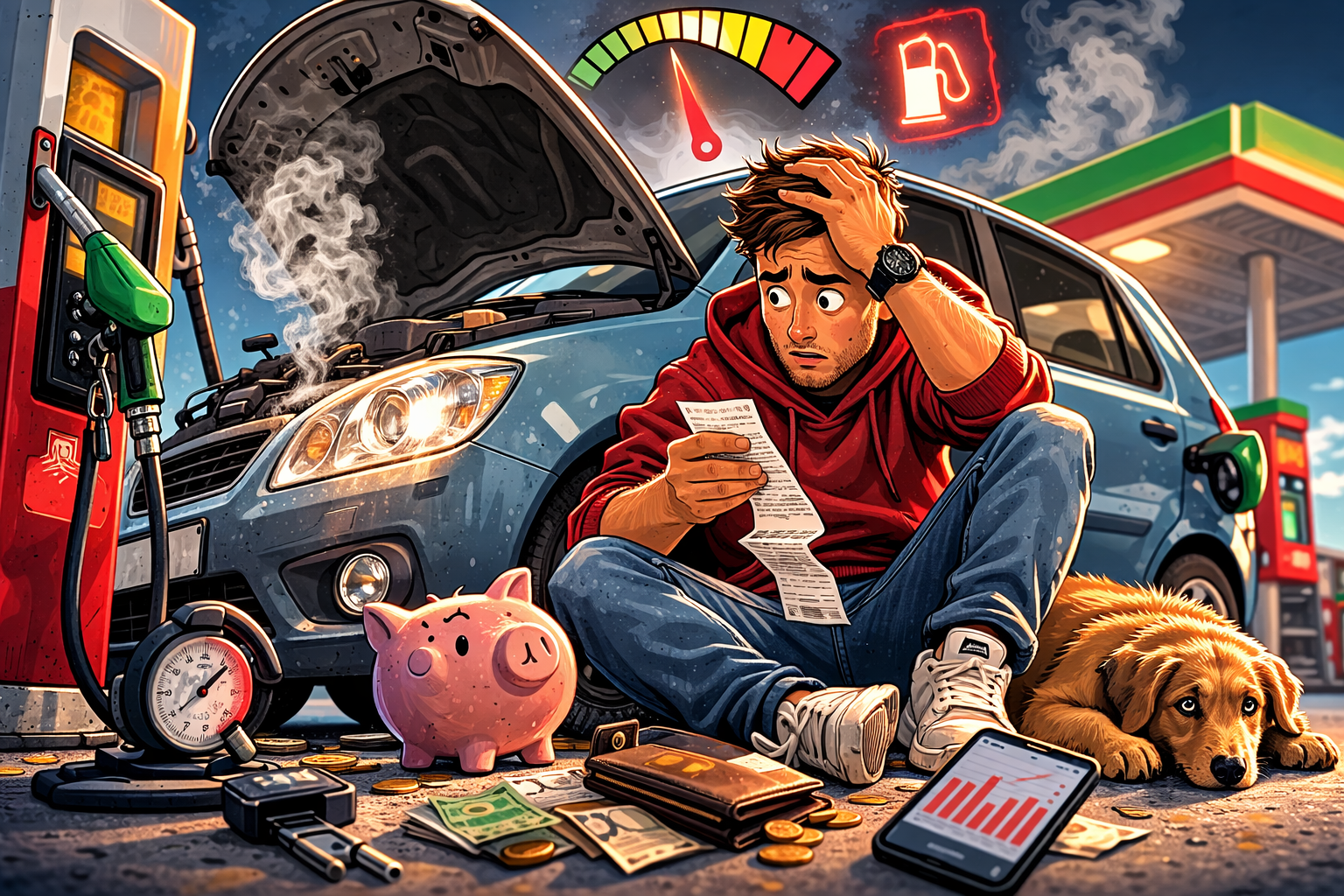
The moment a driver notices that a car is starting to use more fuel than usual often comes gradually. At first it feels like just an impression. Later it becomes obvious that the fuel tank is emptying faster, and by the end of the month the difference in fuel costs is already noticeable. For many people, it starts with one simple question — why is my car suddenly becoming so inefficient?
An increase in fuel consumption rarely happens without a reason. Sometimes it is perfectly normal and linked to the season, traffic conditions, or driving habits. In other cases, it may point to a technical issue that should not be ignored. The sooner a driver understands the cause, the easier it usually is to fix, and the lower the risk that higher fuel consumption will turn into a much more expensive repair.
In this article, we will look at 15 of the most common reasons why a car may start using more fuel, how to recognize those causes, what a driver can check without going to a workshop, and when it is time to let a professional inspect the vehicle.
When increased fuel consumption is a sign that something is wrong
If a car has always used more fuel than expected, that does not automatically mean there is a fault. Many vehicles consume more in real city driving than the figures shown in manufacturer brochures, and that is perfectly normal. But if fuel consumption suddenly rises compared with your previous routine, that is when it is worth paying closer attention.
Warning signs include situations where the car starts using significantly more fuel on the same route, the tank empties faster, the engine feels different, or the car becomes more sluggish than before. Sometimes the higher consumption is only caused by weather conditions, but sometimes it is the first sign of a problem in the engine or the fuel system.
| Situation | Can this be normal? | When to pay attention |
|---|---|---|
| Winter and cold weather | Yes | If the increase is very large or lasts too long |
| City driving with heavy traffic | Yes | If fuel use becomes unusually high without an obvious reason |
| Sudden increase in consumption | Usually not | Worth checking for technical or driving-related causes |
1. Tire pressure is too low
Low tire pressure is one of the simplest and most commonly ignored reasons why a car starts using more fuel. When tire pressure is too low, rolling resistance increases. That means the engine has to work harder to keep the car moving.
Many drivers only check tire pressure before an inspection or when changing tires, but in reality it should be checked much more often. Temperature changes, especially in autumn and winter, can noticeably affect pressure levels.
Even a small deviation from the recommended tire pressure can increase fuel consumption. It also affects handling, braking distance, and tire wear.
One driver wrote on a forum: “I thought my car had suddenly started using much more fuel. It turned out that two tires were significantly underinflated. After correcting the pressure, the fuel consumption went back to normal.”
2. Driving short distances
If a car is mostly used for very short trips, fuel consumption will almost always be higher. A cold engine needs time to reach its optimal operating temperature, and until it does, it runs less efficiently.
This is especially noticeable in winter, when the engine takes even longer to warm up. If most daily trips are only 3 to 5 kilometers long, the car is often operating almost all the time in a less efficient state.
Many people mistakenly think that “such a short trip cannot use that much fuel.” In reality, several short trips a day can easily cost more than one longer trip with a fully warmed-up engine.
3. An overly aggressive driving style
Hard acceleration, sudden braking, and frequent high revs significantly increase fuel consumption. Every time the driver accelerates sharply, the engine has to work much harder to build speed quickly.
Many drivers do not realize how strongly their driving style affects their fuel costs. The difference between calm and aggressive driving can be very noticeable, especially in urban traffic.
If the car is used for normal everyday driving and not for performance driving, a smoother driving style will almost always mean lower fuel consumption and also less stress on the engine itself.
4. Traffic jams and frequent stopping
City traffic is one of the most common reasons why drivers feel that their car has “suddenly started using too much fuel.” In reality, the vehicle may be in perfectly good condition, but the traffic environment may simply have become much heavier.
In traffic jams, a car often stands still with the engine running, then moves slowly, stops again, and accelerates over and over. That kind of driving is one of the least fuel-efficient conditions possible.
If your route, working hours, or season has changed and you now spend more time in traffic, fuel consumption can increase even if there is no mechanical fault at all.
5. A dirty or clogged air filter
An engine needs air in order to burn fuel efficiently. If the air filter is dirty or clogged, the engine gets less air, and the combustion process becomes less efficient.
As a result, the car may feel less responsive, use more fuel, and in some cases seem heavier or more sluggish than usual. This is a relatively simple issue that can often be checked during routine maintenance.
Many drivers continue using the same air filter for too long, especially if the car is often driven in dusty environments or on poor-quality roads.
6. Worn spark plugs
In petrol engines, spark plugs play a very important role. If they are worn out, the fuel-air mixture does not burn as efficiently as it should. That means not only rougher engine operation, but also higher fuel consumption.
Sometimes the driver notices that the car becomes harder to start, hesitates, or loses power during acceleration. In other cases, the only obvious sign is increased fuel usage.
If the spark plugs have not been changed for a long time, replacing them can make a very noticeable difference both in how the engine feels and in fuel economy.
7. Poor-quality fuel
Fuel quality can affect both engine performance and fuel consumption. If the fuel contains impurities or burns poorly, the car may start using more fuel than usual.
In some cases this shows up as a loss of power, harder starting, or uneven engine operation. Modern diesel engines and direct-injection petrol engines can be especially sensitive to this.
This does not mean every smaller fuel station is bad, but if fuel consumption or engine behavior changes noticeably after a specific refuel, it is worth paying attention.
8. Air conditioning and other electrical loads
Using air conditioning increases engine load, so fuel consumption usually rises as a result. This is especially noticeable in urban traffic, where the car often moves slowly and the engine struggles more to remain efficient.
Additional load also comes from window heaters, heated seats, blower fans, powerful sound systems, and other electrical consumers. Individually they may seem insignificant, but together they can increase fuel use more than people expect.
Of course, this does not mean you need to give up comfort. It simply means that on a cold winter morning or a hot summer day, the car will naturally consume more fuel than it does in ideal conditions.
9. Too much weight in the car
The heavier the car, the more energy is needed to move it. That means unnecessary weight inside the vehicle can increase fuel consumption, especially in city driving where the car has to accelerate repeatedly from a stop.
Many drivers keep things in the trunk for long periods that they do not actually need every day — tools, heavy boxes, sports gear, or seasonal items. Each item may seem small, but over time it can affect both fuel consumption and the way the car feels.
If the car feels “heavier” and fuel usage has gone up, it is worth checking not only under the hood but also in the trunk.
10. Roof racks or a roof box
Roof boxes and roof racks are very practical, but they worsen the car’s aerodynamics. At higher speeds, that becomes very noticeable, and the engine has to work harder to overcome greater air resistance.
This is especially obvious on the highway, where the difference in fuel consumption can be surprisingly large. If the roof rack is not being used regularly, there is little reason to leave it on all the time.
Many drivers forget to remove it after a trip and then wonder why the car feels less economical than before.
11. Sensor or oxygen sensor problems
Modern cars rely on various sensors to determine how much fuel and air should be delivered to the engine. If one of those sensors starts working incorrectly, the engine may receive a mixture that is far from ideal.
One common example is the oxygen sensor, which monitors the composition of the exhaust gases. If it sends incorrect data, the engine may start using more fuel than necessary.
In some cases the Check Engine light comes on, but not always. That is why increased fuel consumption combined with subtle changes in engine behavior is often a good reason to perform a diagnostic check.
12. Brakes are not fully releasing
If the brakes do not release fully, extra resistance is created while the car is moving. As a result, the engine has to work harder to push the vehicle forward, and fuel consumption increases.
Sometimes drivers notice this because the car feels heavier, does not roll as freely, or one wheel feels noticeably hotter than the others after a drive. This is not only a fuel economy issue but also a safety issue.
If there is any suspicion that the brakes are dragging when they should not be, this is not something that should be postponed.
13. Incorrect engine oil or old oil
Engine oil affects not only engine protection but also overall efficiency. If the oil is too old, too thick, or does not match the manufacturer’s specifications, the engine may have to work harder than it should.
The effect is not always dramatic, but over time it can become noticeable. This is especially true in cold weather, when the wrong viscosity affects the engine even more clearly.
Sometimes the only thing the driver notices is that the car uses more fuel and feels slightly heavier than before, while the cause turns out to be something relatively simple.
14. Incorrect wheel alignment
If wheel alignment is off, the car does not roll as efficiently and more resistance is created while driving. That means the engine must use more energy to maintain the same speed.
This problem is often accompanied by uneven tire wear or the feeling that the car pulls slightly to one side. Sometimes drivers search for the cause under the hood, while the real issue is related to chassis setup.
If the car recently hit a pothole, had suspension parts replaced, or started wearing tires unevenly, checking wheel alignment is a very logical step.
15. Conditions have simply changed
Sometimes the answer is very simple — the car is not broken, the conditions have simply changed. More urban driving, colder weather, heavier traffic, a heavier foot on the accelerator, or a change in daily routine can all explain higher fuel consumption.
That is why you should not automatically assume that increased fuel use means a defect. First, it is worth asking whether your route, weather, traffic conditions, or driving habits have changed recently.
But if the increase is large, long-lasting, and there is no obvious explanation, then it should not be ignored.
What a driver can check without going to a workshop
You do not always need to rush straight to a repair shop. There are several things a driver can check first — tire pressure, unnecessary weight in the trunk, roof accessories, fuel consumption changes on specific routes, and whether there are any other warning signs such as harder starting or the Check Engine light.
If those simple checks do not reveal the cause, then a proper workshop diagnosis becomes the logical next step. This is especially true if the increase in fuel consumption is accompanied by changes in how the engine behaves.
Conclusion
Higher fuel consumption almost always has a reason — either a technical issue or a change in driving habits and conditions. Sometimes it is something small that can be fixed very quickly, such as tire pressure or unnecessary weight. In other cases, it can be the first warning sign of a more serious problem.
The most important thing is not to ignore the change. The sooner a driver understands why the car has started using more fuel, the better the chance of avoiding even higher costs later.
If you want to calculate your car’s fuel costs and understand how much your everyday driving really costs, use the fuel calculator below.