
 LV
 EN
 RU
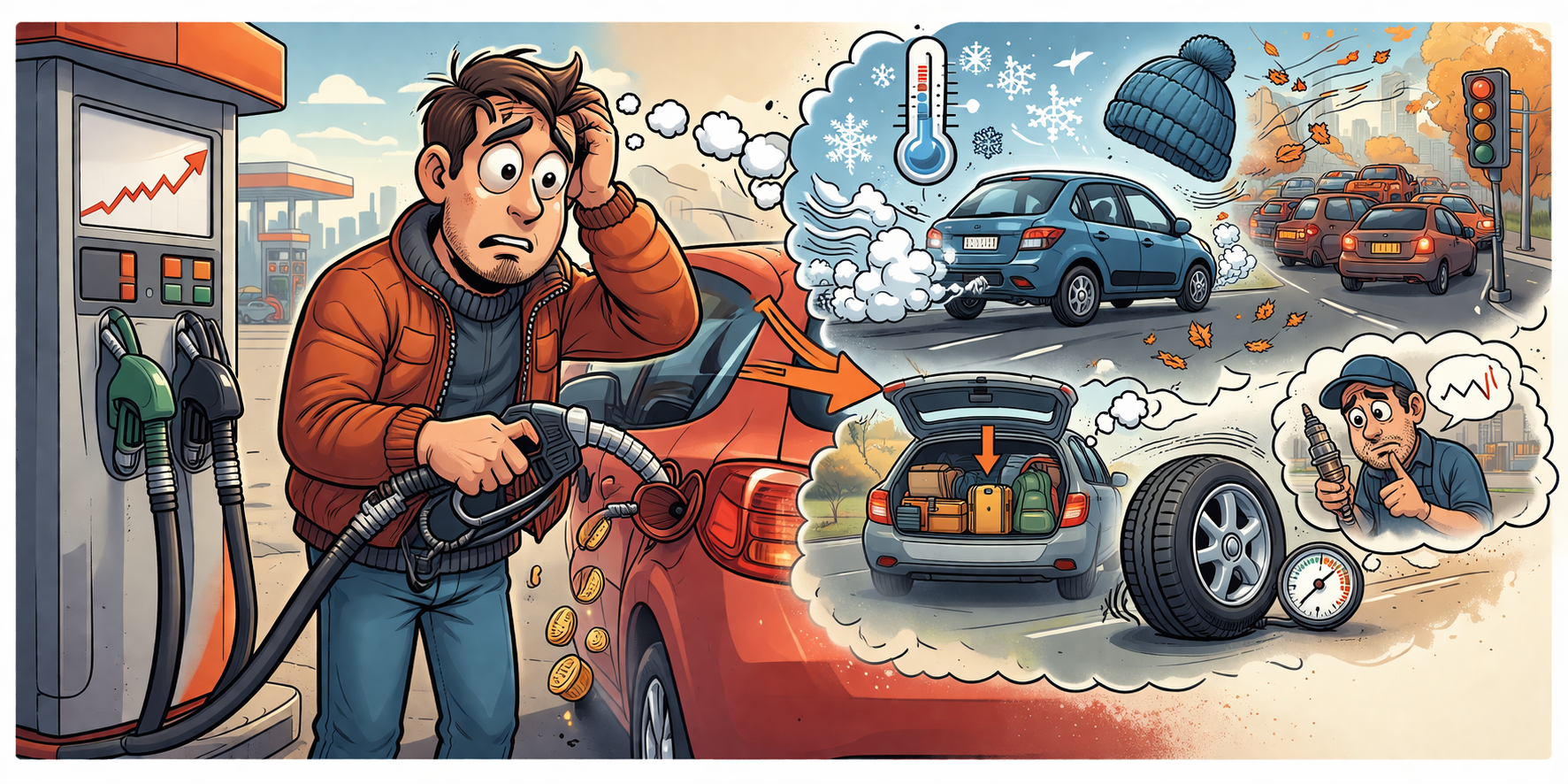
There is a moment that drivers know very well, even if not everyone says it out loud. You haven’t changed your car. You haven’t moved to the other side of the country. You haven’t started towing anything heavy or carrying bricks in the trunk. And yet, suddenly there’s a feeling that fuel is disappearing faster than before. You pull up to a fuel station and think: wait, why do I need to refill again? I’m driving the same way as always.
That “same as always” is one of the most interesting traps in everyday driving. Because very often, the driver truly doesn’t feel any dramatic change. The car still runs. The engine seems fine. Nothing has exploded, the dashboard isn’t flashing like a Christmas tree, and yet fuel consumption becomes uncomfortable. This is the moment when many people start blaming fuel quality, weather, or simply sigh and think: maybe it’s just the car getting older.
But the reality is usually much more interesting. A car almost never starts consuming more fuel “for no reason”. There is almost always a specific cause — or a combination of several small causes. Sometimes it’s city driving and short trips. Sometimes it’s colder weather. Sometimes tire pressure. Sometimes a driving style that has quietly become more aggressive. And very often — the car’s technical condition, which is no longer optimal, even if it’s not yet critical.
This article is about exactly that. Why does a car suddenly start consuming more fuel? What do drivers most often ignore? When is it the season, when is it habits, when is it the car itself — and when is it time to stop comforting yourself and actually look deeper? Because fuel consumption is one of the most honest signals your car gives you: something is no longer as efficient as it used to be.
First truth: fuel consumption almost never increases without a reason
Drivers often hope that higher consumption is just temporary. That it will go away on its own. That it was just a bad week. And yes — sometimes short-term factors exist. But in the long run, fuel consumption is very logical. If it increases, something has changed — in your driving, your routes, or your car.
Many people make the mistake of looking for one big cause, when in reality the increase often comes from several small shifts combined. Nothing is completely broken, but everything together is no longer as smooth. A few more short trips. Slightly lower tire pressure. Slightly delayed maintenance. Slightly colder weather. Slightly more traffic. And at the end of the month — an uncomfortable realization: your car has become more expensive to run.
That’s why this issue is so frustrating. You don’t see one clear problem, but your wallet feels the result. And often, this uncertainty is the worst part. If the car broke down, everything would be obvious. But when it just starts consuming more fuel, it creates a much more uncomfortable question: what exactly changed?
A very typical thought from drivers: “At first I thought I was imagining it. After the third refill, I realized — no, the car really is using more fuel.”
Short trips are one of the most common reasons
If there is one thing that regularly surprises drivers, it’s how much short trips affect fuel consumption. People think: I don’t drive much, so I shouldn’t spend much. But the car sees it differently. It sees repeated cold starts, short distances, and constant stops before reaching optimal efficiency.
This is why city drivers often experience higher real consumption than expected. Not because the car is bad, but because the usage pattern is inefficient.
Cold weather changes more than people expect
As temperatures drop, consumption often rises. The engine warms up slower, the car runs longer in inefficient conditions, heating systems consume energy, and traffic becomes slower and more chaotic.
Many drivers notice this but underestimate its impact.
“Every autumn I promise myself not to be surprised — and every autumn I am.”
Tire pressure is simple — and often ignored
Incorrect tire pressure increases rolling resistance, forcing the engine to work harder.
It’s simple, but many ignore it — until they fix it and realize how much they were losing.
Driving style changes without you noticing
Stress, traffic, and routine can make driving more aggressive without you realizing it.
And aggressive driving increases consumption quickly.
“After driving more calmly for a few days, I realized the problem wasn’t just the car — it was me.”
Maintenance matters more than it seems
Filters, oil, and regular servicing may seem boring — but they directly affect efficiency.
A car can still run while being inefficient.
Alignment and resistance quietly increase costs
Mechanical resistance — from alignment or brakes — forces the car to use more energy.
Sensors and electronics can affect efficiency
Modern cars rely on sensors. When they don’t work perfectly, efficiency drops — even without obvious symptoms.
“Nothing was clearly broken — but everything was slightly off.”
Extra weight also matters
Unnecessary items in your car increase fuel consumption more than you think.
Sometimes your routine has changed — not the car
New routes, more traffic, small daily changes — they all affect consumption.
What should you do?
Analyze honestly. Compare conditions. Don’t ignore long-term changes.
Conclusion
Fuel consumption increases for a reason. And that reason is usually fixable.
Use the calculator below to understand your real costs.