
 LV
 EN
 RU
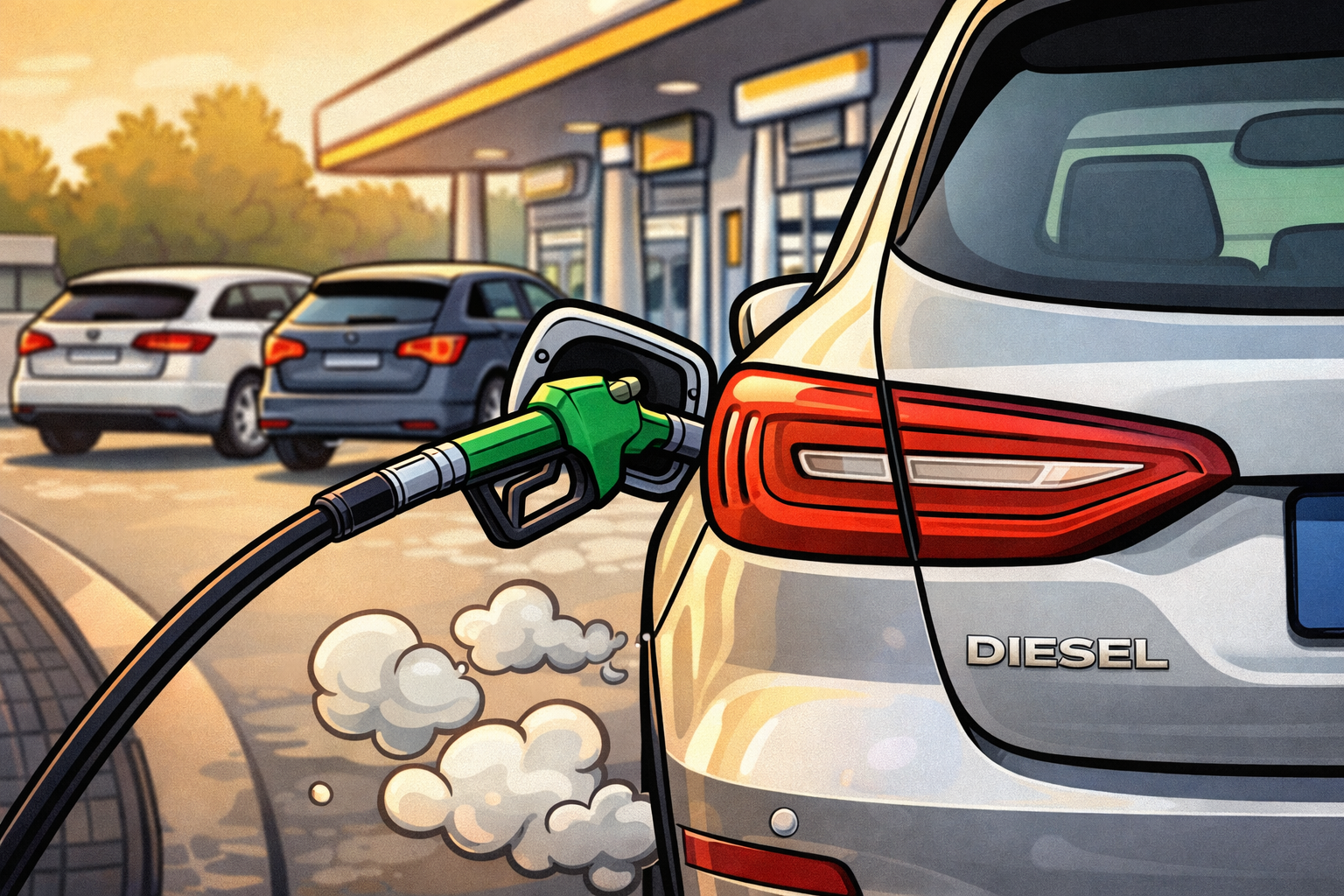
For many drivers, the idea of diesel still sounds very simple: if you want to drive more cheaply, choose diesel. For years, that logic felt almost unquestionable. Lower fuel consumption, strong torque, relaxed motorway driving, and the feeling that one tank could take you very far. And for a long time, that belief was not invented out of nowhere.
But the car world has changed. Routes have changed, engines have changed, emissions systems have changed, and the economic logic behind ownership has changed as well. Diesel has not suddenly become useless, but it is no longer an automatic answer to the question of the cheapest way to drive.
This is exactly where many people make a mistake. They compare only one figure — litres per 100 kilometres — and then assume the story is over. But car costs are much wider than that. They include not only fuel consumption, but also how the car is used, whether the engine is living in the kind of environment it was built for, how often it is driven cold, how short the everyday trips are, whether it spends its life in traffic, how long the owner plans to keep it, and how much money and stress typical maintenance items or common faults can create.
That is why the real question is no longer “is diesel economical?” The more accurate question is: “is diesel economical for my actual everyday life?”
Diesel can still make sense — just not for everyone
Let’s be fair from the start — diesel has not become “bad.” It can still be a very logical choice for someone who drives a lot on the highway, regularly covers long distances, and genuinely uses the car in the way diesel engines like best. If daily life involves longer routes, intercity travel, motorway driving, and high annual mileage, diesel can still deliver very real savings.
That part is not a myth. It is a real advantage in a specific type of use. The problem begins when the same choice is mechanically applied to a completely different lifestyle. And in this case, the “wrong environment” is very often the city.
City driving and short trips change the entire calculation
A modern diesel is not the same as the older, simpler workhorse many people still remember. The more modern the diesel, the more systems it has for emissions control and cleaner operation. That is not bad in itself, but it does mean the engine has certain expectations about how it will be used.
If a car’s daily life mostly consists of short trips, cold starts, traffic jams, nursery runs, supermarket runs, work commutes, and then back home again, diesel’s theoretical economy starts looking very different. The engine often does not get enough time to settle into the kind of operating condition it prefers, and what looks efficient on paper becomes less convincing in real life.
“Diesel is great for long distances, not for crawling through traffic jams. The DPF and EGR cleaning cycle does not even properly begin if the car is not driven at a steady speed.”
— comment from a car forum
That quote captures something many drivers feel in practice. A diesel car that spends most of its life doing cold starts, short hops, and slow-moving city traffic is often living in compromise rather than in its ideal operating pattern. And in the car world, compromises often lead not only to inconvenience, but also to higher costs.
Lower fuel consumption does not automatically mean lower total cost
This is where many drivers fall into the logic trap. They see that diesel uses less fuel in theory and assume that this is the whole story. But it is not. Lower consumption does not automatically mean lower overall ownership cost. If the car is regularly used in a way that does not suit it, then fuel savings start competing against other costs and risks.
That is why some people spend years telling themselves they own a “very economical car,” while in reality they are paying more than they honestly admit. Fuel consumption is only one line in the full cost picture.
“A cold diesel may seem like it saves fuel, but later you can easily give that saving back in DPF and EGR problems. On long trips, though, diesel economy is still very good.”
— comment from a car forum
This is an important observation because it splits the diesel story into two realities. On long trips, yes, the savings can be very real. In the wrong kind of use, those savings can quietly leak away through other doors.
When drivers themselves begin doubting their own choice
There is another very human side to this. People do not always choose an engine because it perfectly matches their life. Sometimes they choose it because of what was available, what seemed affordable, what they were used to, or because they wanted a certain model and that version happened to be diesel. Then, after buying it, they slowly realise that their everyday life does not really match the choice they made.
That is completely understandable. Cars are often bought with one idea in mind, but then used in a very different rhythm. At first it may not seem serious, but over time there is a growing feeling that the theory looked great while the real-life fit was never quite right.
“Mostly city driving and short trips. In every other way, I would probably have preferred a petrol car.”
— comment from a car forum
That kind of comment is especially valuable because it is not ideological. It is simply an honest conclusion after experience. And those are exactly the insights many people are looking for when they themselves are trying to decide whether diesel really makes sense for them.
Hybrids have taken away part of diesel’s old logic
Years ago, if someone wanted lower fuel consumption, the answer often narrowed down to diesel. Today the situation is different because hybrids have become much more normal, understandable, and practical in everyday use. If daily life is dominated by city traffic, congestion, repeated braking, and relatively short distances, a hybrid can be not an “alternative curiosity,” but a more rational choice than diesel.
This is one of the biggest reasons diesel has lost part of its old automatic appeal. It is no longer the only obvious choice for someone who wants lower running costs. And for many urban drivers, it is not even the main one anymore.
Sometimes petrol is not just simpler — it is smarter
There is another point many people underestimate. A petrol car is not always just the “simpler option.” In some cases it is genuinely the smarter option for the way a person actually lives. If annual mileage is not huge, if daily trips are short, and if the owner does not want to think about whether the engine is being used in its ideal operating conditions, petrol can be the calmer financial choice.
This matters especially for drivers whose car use is irregular. One week they drive more, another week less. One day it is the supermarket, another day the office, then several days with hardly any driving at all. For that kind of rhythm, diesel is not always the ideal answer, even if the official fuel figure looks attractive.
Why do so many people still hold on to diesel?
Because the old logic has not disappeared. Many people have personal experience with diesel cars that really were very economical. Others genuinely do enough mileage that diesel is still the right answer for them. And many simply buy diesel by inertia — because “that is what people always did,” or because friends still say diesel is the cheaper option.
But the smarter approach today is different: not to repeat an old formula, but to look honestly at your real usage model. How much do I drive? Where do I drive? How often am I using the car cold? Does my car mainly live in the city or on the highway? Those are the questions that decide whether diesel is still your money-saving ally or whether it has quietly become the wrong habit.
Conclusion
Diesel is no longer always the cheapest option not because it has suddenly become bad, but because the world around it has changed. Driving patterns have changed, hybrids have become much stronger in city economy, and many drivers now live in routines that are not especially friendly to diesel engines. Lower fuel consumption still matters, but it is no longer the only question that matters.
The smartest conclusion is simple: diesel can still make perfect sense if you drive a lot and in the right conditions. But if your daily life is short trips, city use, and irregular driving, then “diesel = cheaper” is no longer a safe formula. And that is exactly where smarter car choice begins.
If you want to compare what different driving scenarios cost you with petrol, diesel, or hybrid, use the calculator below.