
 LV
 EN
 RU
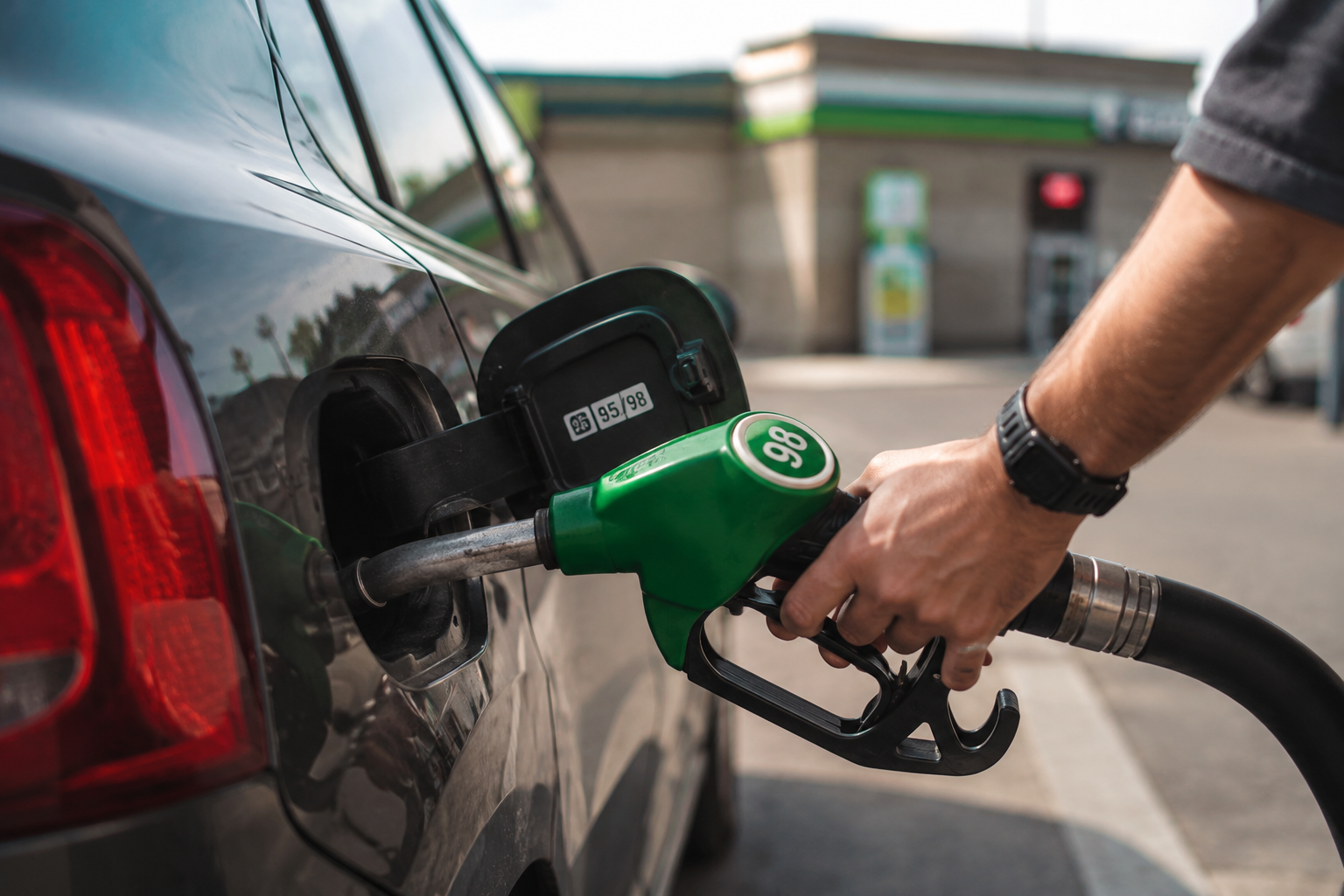
At a filling station, the choice appears simple: 95-octane petrol costs less, while 98-octane petrol is presented as a higher-grade alternative. The pump may display words such as “premium”, “performance”, “ultimate” or other promises that create the impression that the more expensive fuel will certainly make the engine run better and use less fuel.
Some drivers say their car feels more responsive after filling it with 98-octane petrol. Others claim they can travel further on one tank. Some have used only the more expensive fuel for years because they believe it protects the engine better. Other drivers notice no difference at all.
The truth is not the same for every vehicle. An engine designed to run on 98-octane petrol may use the higher octane rating to improve power, efficiency or protection against knock. A conventional engine designed by the manufacturer for 95-octane petrol may gain almost nothing from using 98.
The correct question is therefore not, “Is 98-octane petrol better?” The correct question is, “Can this particular engine use the higher octane rating, and was it designed to do so?”
The driver’s short takeaway right at the start: if the manufacturer requires 98-octane petrol, use it. If 98 is only recommended, the benefit may depend on driving conditions. If the vehicle is designed for 95-octane petrol, the more expensive fuel will usually not pay for itself.
Quick answer: does 98-octane petrol reduce fuel consumption?
Not automatically.
A higher octane rating means the fuel is more resistant to uncontrolled self-ignition or engine knock. It does not mean that every litre necessarily contains more energy.
If an engine is calibrated for 98-octane petrol, its management system may use more advanced ignition timing, higher turbocharger boost or other more efficient settings under certain conditions.
If the engine cannot use these adjustments, fuel consumption may remain exactly the same while every litre costs more.
Even in a vehicle for which 98-octane petrol is recommended, a reduction in consumption is not guaranteed. The result is influenced by engine temperature, load, traffic, driving speed, weather, tyres and driving style.
What do the numbers 95 and 98 actually mean?
The numbers 95 and 98 refer to the fuel’s Research Octane Number, or RON. This describes the petrol’s ability to resist knock in a spark-ignition engine.
During normal petrol-engine operation, the spark plug ignites the air-fuel mixture at a carefully selected moment. The flame front spreads through the cylinder in a controlled way and creates pressure that pushes the piston down.
If part of the mixture ignites uncontrollably because of high pressure and temperature, very rapid pressure waves are created. This phenomenon is known as detonation or knock, and the driver may sometimes hear it as a metallic pinging or rattling noise under load.
98-octane petrol is more resistant to this uncontrolled ignition than 95-octane petrol. This allows an engine to be designed with a higher compression ratio, greater turbocharger boost or more aggressive ignition timing.
A simplified comparison:
95-octane petrol is not “weak” petrol.
98-octane petrol is not automatically more “powerful” petrol.
The main property of 98-octane petrol is its greater resistance to knock.
A benefit appears only when the engine can use that property.
European RON and American octane ratings are not the same
Advice from the United States often refers to 87-, 89- or 91-octane petrol. These numbers should not be compared directly with the 95 and 98 ratings used in Europe.
European filling stations generally display RON, or Research Octane Number. Pumps in the United States normally display AKI, which is the average of the Research Octane Number and Motor Octane Number.
American “premium 91” is therefore not a lower-grade fuel than European 95-octane petrol simply because its displayed number is smaller. The regions use different measurement and labelling systems.
Practical rule: follow the RON stated in the European owner’s manual or on the fuel-filler flap, rather than numbers mentioned on American forums.
“Required”, “recommended” and “permitted” do not mean the same thing
The most important information is found not in fuel advertising but in the vehicle’s owner’s manual and on the fuel-filler flap. These may specify the minimum, recommended or required fuel grade.
| Manufacturer’s instruction | What does it mean? | What should you use every day? |
|---|---|---|
| Minimum RON 95 | The engine is designed to operate safely on 95 or a higher octane rating | 95-octane petrol is normally the most economical choice |
| RON 98 recommended, minimum RON 95 | The engine can operate on 95, but power or efficiency may be lower under some conditions | The choice depends on engine load, price and the measured result |
| RON 98 required | The engine management, performance and protection are designed around this fuel | Use 98 or a higher octane rating permitted by the manufacturer |
| RON 95–98 | The manufacturer permits both grades, although performance differences may exist | Compare consumption and cost in a proper long-term test |
If 98-octane petrol is listed as required, trying to save money by using 95 is not sensible. Even if the engine appears to run normally, the management system may need to abandon its optimal settings or restrict performance.
If 98 is only recommended and 95 is permitted, the vehicle can normally adapt. However, adaptation does not mean the engine will produce an identical result with both fuels under every condition.
How does an engine adapt to a lower octane rating?
Modern petrol engines normally have knock sensors. These detect vibrations in the engine block and help the engine control unit determine whether combustion is approaching unwanted detonation.
If the engine detects a risk of knock, the control system may retard ignition timing, reduce turbocharger boost, adjust fuel delivery or use other protective measures. This helps the engine operate safely, but it may reduce power and efficiency.
With a higher octane rating, an engine whose software is designed for it may use more efficient settings under certain conditions. This is most likely to occur under high load, at high temperature, during hard acceleration or with high turbocharger boost.
An engine’s ability to “survive” on 95-octane petrol does not mean that 95 is always the optimal fuel. However, the ability to use 98 also does not mean it will definitely pay off during calm everyday driving.
When can 98-octane petrol provide a noticeable benefit?
A higher octane rating is most useful in an engine operating close to its knock limit and whose management system can use the fuel’s additional resistance.
| Situation | Possible benefit of 98-octane petrol | Important note |
|---|---|---|
| High-compression engine | Lower knock risk and the possibility of more optimal ignition timing | Only when supported by the manufacturer’s calibration |
| Powerful turbocharged engine | Potentially more stable operation at high boost and load | The difference may be very small during calm city driving |
| Trailer towing or mountainous roads | Less need to retard ignition during prolonged heavy load | The owner’s manual must still be followed |
| Hot weather and high engine load | Greater resistance to knock | The effect may be unnoticeable during ordinary driving in a moderate climate |
| Performance driving or track use | The engine may maintain its intended output for longer | Fuel economy is normally not the main objective in this situation |
When is 98-octane petrol unlikely to change anything important?
If the manufacturer clearly specifies 95-octane petrol for a naturally aspirated engine or a modestly powered turbo engine and does not state any benefit from a higher octane rating, the advantage of 98 will often be minimal.
An engine cannot use a property that its compression ratio, ignition timing and software do not require. In this situation, the car may run perfectly normally on 98-octane petrol, but not necessarily produce more power or use less fuel.
A subjective impression after one refill is also not reliable evidence. Traffic may have been lighter, the weather warmer, the headwind weaker, tyre pressure higher or the driver may have unconsciously driven more gently because the more expensive fuel was being tested.
One tank is not an experiment. Consumption over one journey can easily be changed by traffic, temperature, wind, route and the moment at which the fuel-pump nozzle switches off.
Does 98-octane petrol contain more energy?
A higher octane rating does not itself mean that the fuel contains more energy per litre. Octane describes resistance to knock, not the fuel’s “strength”.
Fuels with different octane ratings may have slightly different chemical compositions, bioethanol contents and additive packages. These can influence energy content or engine operation, but the differences cannot simply be equated with the numbers 95 and 98.
The claim that “98-octane petrol contains more energy, so it always allows the car to travel further” is therefore technically incorrect.
95, 98, E5 and E10: four labels with different meanings
The octane rating should not be confused with the E5 and E10 labels. The numbers 95 and 98 refer to resistance to knock, while E5 and E10 indicate the maximum proportion of ethanol in the petrol.
| Label | What does it indicate? | What does it not indicate? |
|---|---|---|
| RON 95 | The minimum Research Octane Number | The exact ethanol content or additive package |
| RON 98 | Greater resistance to knock | Automatically greater energy content |
| E5 | Up to 5% ethanol by volume | A particular octane rating |
| E10 | Up to 10% ethanol by volume | That the fuel must be either 95 or 98 octane |
In practice, 95-octane petrol at one filling station may be labelled E10, while its 98-octane petrol is E5. The labelling may differ in another market or product. Both markings should therefore be checked.
If a vehicle is not compatible with E10, switching to a particular E5 product may be more important than the octane rating itself. Owners of older cars, motorcycles and seasonally used machinery should be particularly careful.
Does 98-octane petrol clean the engine better?
The octane rating itself does not describe the fuel’s cleaning ability. Premium products sold by filling-station brands may use different detergent, corrosion-control or other additive packages, but this is a property of the particular product rather than the number 98.
It is therefore incorrect to assume that every 98-octane petrol cleans an engine better than every 95-octane petrol. Specific products and their manufacturers’ technical information must be compared.
If an engine runs unevenly, uses too much fuel or has blocked injectors, switching to more expensive petrol should not replace proper diagnosis and repair.
Important: premium fuel is not a universal repair product. Faulty spark plugs, ignition coils, injectors, sensors or low compression will not disappear simply because the tank has been filled with 98-octane petrol.
A practical break-even calculation
Consider a hypothetical situation: 95-octane petrol costs €1.65/l, while 98-octane petrol costs €1.77/l. The vehicle uses 7.0 l/100 km on 95-octane petrol and covers 1,000 km per month.
With 95-octane petrol, the vehicle requires 70 litres per month, costing €115.50. For 98-octane petrol to pay for itself, consumption would need to fall enough to compensate fully for the higher price per litre.
| Fuel and consumption | Litres per 1,000 km | Monthly cost | Difference from 95 |
|---|---|---|---|
| 95 octane — 7.0 l/100 km | 70 litres | €115.50 | Reference point |
| 98 octane — 7.0 l/100 km | 70 litres | €123.90 | +€8.40 |
| 98 octane — 6.9 l/100 km | 69 litres | €122.13 | +€6.63 |
| 98 octane — 6.7 l/100 km | 67 litres | €118.59 | +€3.09 |
| 98 octane — 6.5 l/100 km | 65 litres | €115.05 | −€0.45 |
In this example, consumption would need to fall from 7.0 to approximately 6.5 l/100 km — nearly 7% — before 98-octane petrol began to pay for itself. For many vehicles, such a large improvement from the octane change alone is unrealistic.
Break-even formula:
Current cost per 100 km = 95-octane consumption × 95-octane price
Break-even consumption with 98 = current cost per 100 km / 98-octane price
Example: 7.0 × €1.65 = €11.55. €11.55 / €1.77 = approximately 6.53 l/100 km.
When can 98-octane petrol be worthwhile without directly paying for itself?
Not every driver chooses fuel solely according to the lowest operating cost. If the manufacturer recommends 98-octane petrol for full power, a driver may be willing to pay more for improved throttle response, more stable operation under heavy load or a sportier driving experience.
In this case, the more expensive petrol is not a financial saving but a deliberately purchased performance benefit. It is similar to paying for a more powerful engine or better tyres: the choice may be justified even though it does not reduce total costs.
It is important not to confuse two different claims. “The car performs better on 98-octane petrol under certain conditions” is not the same as “98-octane petrol always saves money”.
How should you properly compare consumption with 95 and 98?
A single-tank comparison is too inaccurate. To produce a reasonably reliable result, each fuel should be tested over several similar refuelling cycles.
A proper test plan:
1. First confirm that both fuel grades are permitted for the vehicle.
2. Use the same filling station and, where possible, the same pump.
3. Use at least three full refuelling cycles for each fuel.
4. Calculate consumption from litres added and kilometres travelled, not only from the trip computer.
5. Keep the routes, speeds and driving style as similar as possible.
6. Record temperature, tyre changes, passengers and unusual journeys.
7. Compare not only l/100 km but also the cost per 100 km.
If fuel prices change during the test, use the actual price from each refill. Consumption may decrease slightly with 98-octane petrol while the total cost still increases.
After switching to another fuel, the engine management system may need time to adjust its corrections. The first few kilometres or the first partially mixed tank should therefore not be treated as the final result.
Can 95- and 98-octane petrol be mixed?
If both fuels are permitted for the vehicle, mixing them in the tank is normally not a problem. The result is an intermediate octane rating whose exact value depends on the quantity of each fuel.
For example, if the tank contains half a tank of 95-octane petrol and a similar quantity of 98 is added, the resulting octane rating will be approximately between the two. This is not a precise method of creating laboratory-grade 96.5-octane fuel, but the engine will receive a mixture with an intermediate resistance to knock.
If a vehicle requires 98-octane petrol and 95 was added by mistake, follow the manufacturer’s instructions. Until the correct fuel has been added, avoid heavy engine load, hard acceleration and high engine speeds.
Can 98-octane petrol damage an engine designed for 95?
If the manufacturer permits petrol rated RON 95 or higher, 98-octane petrol will not normally harm the engine. The main risk is financial: you may pay more without receiving a noticeable benefit. Always check the manual for the specific vehicle.
Should an older car automatically use 98-octane petrol?
No. The age of a vehicle does not itself determine the required octane rating. The manufacturer’s requirements, engine compression ratio, technical condition and compatibility with E5 or E10 petrol must be considered.
If the engine knocks on 95, should you simply switch to 98?
If the manufacturer specifies 95-octane petrol, audible knocking may indicate unsuitable fuel, overheating, an ignition or air-fuel mixture problem, deposits or another technical fault. 98-octane petrol may reduce the symptom, but it should not replace proper diagnosis.
Common myths about 95- and 98-octane petrol
| Myth | Fact | Practical takeaway |
|---|---|---|
| 98-octane petrol always provides more power | A power benefit is possible only in an engine calibrated for it | Check the manufacturer’s instructions |
| A higher octane rating means more energy | Octane primarily describes resistance to knock | Do not automatically expect greater range |
| 98-octane petrol always cleans the engine better | Cleaning performance depends on the specific additive package | Compare products, not only octane ratings |
| Fuel consumption always decreases with 98 | Consumption may remain unchanged or improve too little to cover the price difference | Calculate the cost per 100 km |
| An old engine always needs a higher octane rating | The required fuel is determined by engine design and technical condition | Follow the manual and proper diagnosis |
Mini test: which petrol should you choose?
Answer these questions:
1. Is 98-octane petrol listed as required on the fuel flap or in the owner’s manual?
2. Does the manufacturer specify greater power or efficiency with 98-octane petrol?
3. Do you regularly tow a trailer, drive under heavy load or use a performance mode?
4. Have you compared at least three full tanks of each fuel?
5. Have you calculated the cost per 100 km rather than consumption alone?
6. Do you know whether the selected product is E5 or E10 and whether your vehicle is compatible?
If 98 is not required and you answered “no” to several questions, carry out a proper cost and consumption comparison before paying more.
A simple decision process at the filling station
Follow this sequence:
1. Check the minimum RON specified by the manufacturer.
2. Check whether 98 is required or merely recommended.
3. Check the E5 or E10 label and the vehicle’s compatibility.
4. If the vehicle is designed for 95 and no benefit from 98 is stated, choose 95.
5. If 98 is recommended, compare both fuels over several full tanks.
6. Calculate not only l/100 km but also the cost per 100 km.
7. If the engine is not running correctly, diagnose the fault rather than treating it with more expensive petrol.
Conclusion: the best fuel is not the most expensive, but the one suitable for the engine
98-octane petrol is technically valuable for engines that require greater resistance to knock. High-compression engines, powerful turbocharged engines and performance cars may use it to maintain their intended power and efficiency.
However, a higher octane rating is not a universal method of reducing fuel consumption. In an engine designed for 95-octane petrol that cannot use the properties of 98, the only guaranteed difference may be a larger total on the fuel receipt.
If 98-octane petrol is required, follow the manufacturer’s instruction. If it is recommended, consider your driving conditions and perform a proper multi-tank test. If the car is designed for 95-octane petrol, there is no reason to feel guilty about choosing the cheaper fuel.
Finally, do not confuse the octane rating with E5 or E10 labelling, and do not treat premium fuel as a substitute for repairs. The best choice always begins with the owner’s manual, not an advertising slogan beside the pump.
The driver’s final takeaway: if the engine cannot use the advantages of 98-octane petrol, you are not buying more power or better economy — you are simply buying a more expensive litre.